PANAVIA SA CEMENT UNIVERSAL awarded Top Award winner by Dental Advisor

In the category CEMENT: Self Adhesive; PANAVIA SA Cement Universal was awarded Top Award 2020 by Dental Advisor.


Bond Strength:

As tested in DENTAL ADVISOR Biomaterials Laboratories, bond strength to dentin
and enamel were best in class for a self-adhesive resin cement.


Universal:

Since it can be utilized on any substrate, DENTAL ADVISOR
Laboratories tested the bond to both lithium disilicate and zirconia and
results were outstanding.


Evaluator Comments:
• “This cement is very strong and has great adhesive properties.
There was virtually no post-op sensitivity.”
• “Very user-friendly and cleaned up well.”

The single hand dosing method

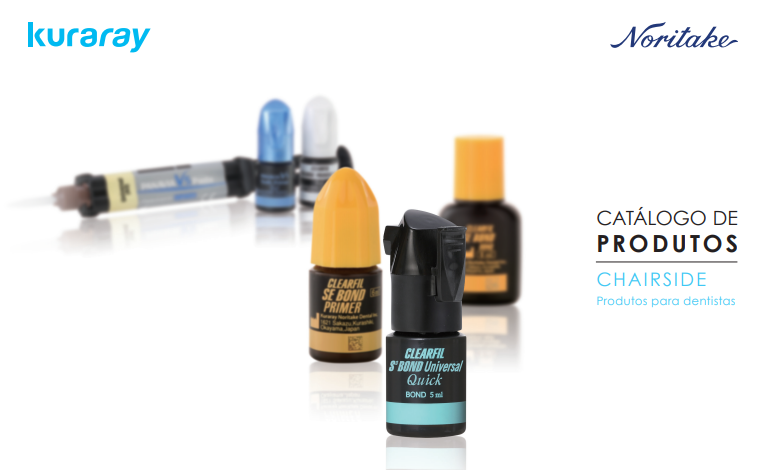
CLEARFIL Universal Bond Quick: Now with a flip-top cap

As a company, Kuraray Noritake Dental is committed not just to creating innovative products, but also to building upon our successes. A perfect example of this approach is CLEARFIL Universal Bond Quick, our newest universal dental bonding agent. A descendant of the original CLEARFIL BOND SYSTEM F and CLEARFIL SE BOND, this one-step adhesive eliminates the need for waiting, rubbing or applying additional layers. With the introduction of a flip-top cap, CLEARFIL Universal Bond Quick is now more compact and efficient than ever.


Easier than ever to use

Thanks to the new flip-top cap, the bottle can easily be opened, manipulated and closed with just one hand. In addition, its unique nozzle allows for controlled dispensing of the adhesive and ensures that there is minimal wastage. Together, these improvements are intended to enable ideal results for both the dentist and the patient.


Rapid bond technology

Though its container may be different, the patented monomer technology of Kuraray Noritake Dental still forms the backbone of this product. Other adhesives tend to rely on “slow monomers” with relatively slow dentinal penetration, but CLEARFIL Universal Bond Quick combines Kuraray’s famous MDP monomer—scientifically proven to deliver stronger and more stable bonds than other manufacturers’ MDP—with hydrophilic amide monomers. This allows it to penetrate the dentine faster and more efficiently and provide a stable, moisture-resistant sealing of the cavity.


Combine with PANAVIA SA Cement Universal and CLEARFIL DC CORE PLUS

This universal adhesive pairs excellently with CLEARFIL DC CORE PLUS, a dual-cure, radiopaque core build-up material, to deliver durable, long-lasting restorations that dentists can trust. Delivered in a convenient automix system, CLEARFIL DC CORE PLUS possesses excellent compressive and flexural strength, with a filler loading weight of 74wt%.


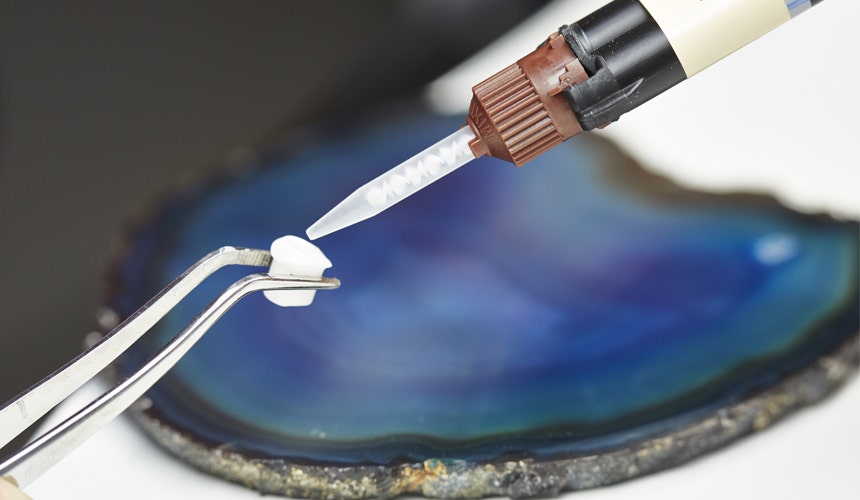
CLEARFIL Universal Bond Quick is also suited for use with PANAVIA SA Cement Universal, a resin cement that similarly utilises MDP monomer technology for durable bonding. PANAVIA SA Cement Universal possesses a stable three-year shelf life at room temperature, effectively eliminating the need for refrigeration, and its improved endo tip allows for greater precision and control over cement placement during post cementation.


By combining excellence in performance with simplicity in use, Kuraray Noritake Dental’s CLEARFIL Universal Bond Quick represents an evolution in dental bonding agents. 

The single hand dosing method

CLEARFIL Universal Bond Quick: Now with a flip-top cap

As a company, Kuraray Noritake Dental is committed not just to creating innovative products, but also to building upon our successes. A perfect example of this approach is CLEARFIL Universal Bond Quick, our newest universal dental bonding agent. A descendant of the original CLEARFIL BOND SYSTEM F and CLEARFIL SE BOND, this one-step adhesive eliminates the need for waiting, rubbing or applying additional layers. With the introduction of a flip-top cap, CLEARFIL Universal Bond Quick is now more compact and efficient than ever.


Easier than ever to use

Thanks to the new flip-top cap, the bottle can easily be opened, manipulated and closed with just one hand. In addition, its unique nozzle allows for controlled dispensing of the adhesive and ensures that there is minimal wastage. Together, these improvements are intended to enable ideal results for both the dentist and the patient.


Rapid bond technology

Though its container may be different, the patented monomer technology of Kuraray Noritake Dental still forms the backbone of this product. Other adhesives tend to rely on “slow monomers” with relatively slow dentinal penetration, but CLEARFIL Universal Bond Quick combines Kuraray’s famous MDP monomer—scientifically proven to deliver stronger and more stable bonds than other manufacturers’ MDP—with hydrophilic amide monomers. This allows it to penetrate the dentine faster and more efficiently and provide a stable, moisture-resistant sealing of the cavity.


Combine with PANAVIA SA Cement Universal and CLEARFIL DC CORE PLUS

This universal adhesive pairs excellently with CLEARFIL DC CORE PLUS, a dual-cure, radiopaque core build-up material, to deliver durable, long-lasting restorations that dentists can trust. Delivered in a convenient automix system, CLEARFIL DC CORE PLUS possesses excellent compressive and flexural strength, with a filler loading weight of 74wt%.


CLEARFIL Universal Bond Quick is also suited for use with PANAVIA SA Cement Universal, a resin cement that similarly utilises MDP monomer technology for durable bonding. PANAVIA SA Cement Universal possesses a stable three-year shelf life at room temperature, effectively eliminating the need for refrigeration, and its improved endo tip allows for greater precision and control over cement placement during post cementation.


By combining excellence in performance with simplicity in use, Kuraray Noritake Dental’s CLEARFIL Universal Bond Quick represents an evolution in dental bonding agents. 

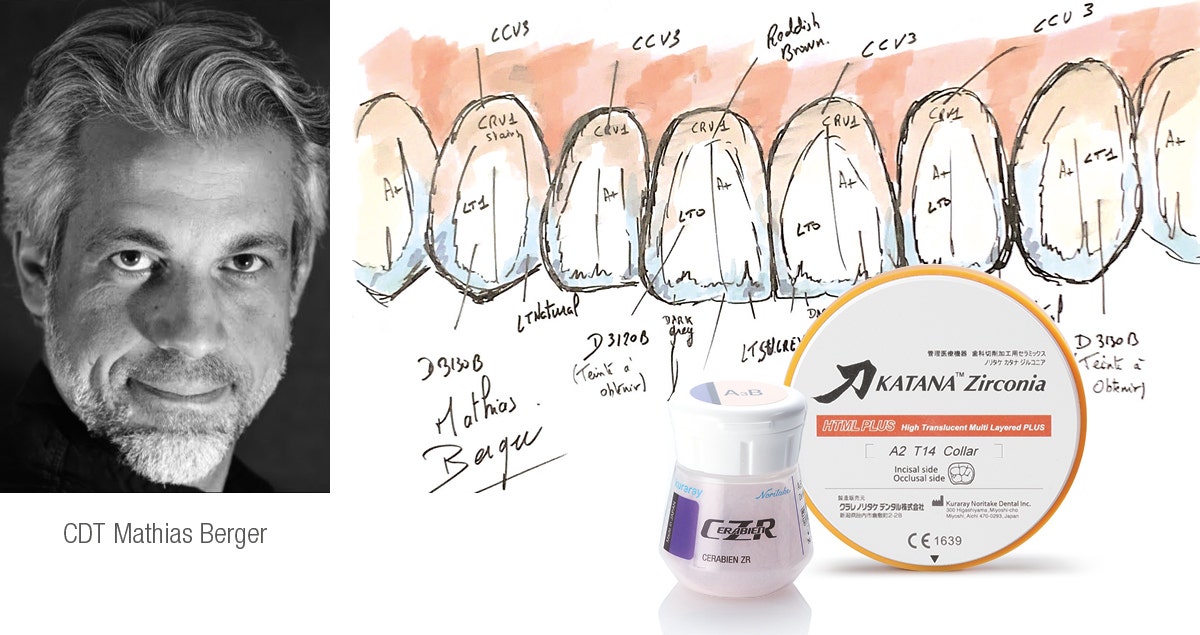
KATANA™ Zirconia and CERABIEN™ ZR Porcelain is an ideal combination - Interview Bjorn Roland

As a dental technician with many years of experience, Björn Roland has always pursued one goal in his lab: restorations that seamlessly mimic natural dentition and possess reliable functionality. Here, he discusses how he integrates Kuraray Noritake Dental’s dental solutions into his daily workflow and shares some tips for creating aesthetically-pleasing dental restorations.


Could you speak a little bit about your dental journey and how you were first introduced to Kuraray Noritake Dental’s range of products?

ROLAND: Well, I was first introduced to these products when I was in Japan about 15 years ago. I was there to undertake a course at the Osaka Ceramic Training Center of Shigeo Kataoka, but I had the possibility during this time to visit courses conducted by Hitoshi Aoshima. Aoshima is the person primarily responsible for Noritake Porcelain and who had the idea for the colouring, and he was also responsible for the idea of internal staining. I also had the possibility to complete a course with Aoshima and visit his dental lab in Tokyo, which enabled me to begin working with Noritake porcelain when I arrived back in Germany.


You spoke at IDS 2019 about the evolution of the KATANA™ Zirconia range, starting with the 2013 introduction of KATANA™ Zirconia ML. When did you first start working with this product?

When Kuraray Noritake Dental was formed in 2012, I was lucky enough to be one the first dental technicians to experience the multilayered technology that forms the backbone of KATANA™ Zirconia, to test it out before it was released to the German market. Prior to this, there was only a monocoloured zirconia material available, which you could stain yourself by dipping it into a staining solution, but I was never a big fan of it. From the moment that Kuraray Noritake came up with its multilayered approach, I could see the potential of KATANA™ Zirconia -simply put, it was easy to use and had a nice and aesthetic colour shift when used for restorations.


As a dental technician, do you use KATANA™ Zirconia in your everyday workflow?

In our laboratory we only use KATANA™. Of course, not everything is made from the multilayered variety—we have primarily used the monocoloured KATANA™ HT for the framework in the past, though we do use the multilayered option for monolithic restorations and for certain frameworks.


Do you use KATANA™ Zirconia in combination with CERABIEN™ ZR porcelain?

Yes, always. For me, it is a perfect combination. Not only are they easy to use together, but they also combine to create aesthetic restorations with great, natural colour and a high level of flexural strength. In our laboratory, everyone uses CERABIEN™ ZR porcelain, from those who are just starting with ceramics through to the experienced and highly skilled dental technicians. Even technicians who have come from other dental laboratories and tried other porcelain materials have adapted very quickly to using it and seem to really like it. The chipping risk with CERABIEN™ ZR porcelain is very low, and we truly admire the brilliance of the colour.


Is CERABIEN™ ZR porcelain a material, in your opinion, that can benefit those with expert knowledge of porcelains?

Of course. For those who are experienced in dealing with ceramic materials and understand how they behave, they can absolutely achieve high-end results with CERABIEN™ ZR. It’s important to remember, though, that even dental technicians who aren’t so familiar with ceramic veneering are also getting good results out of it - it’s not too difficult to use and get good results.


Do you use any other Kuraray Noritake Dental products in your dental lab?

Apart from KATANA™ and CERABIEN™ ZR, one product that I personally like and use from Kuraray Noritake Dental is Meister Cones, which are these small paper cones that assist with the finishing and polishing of porcelain surfaces. I brought them back with me to Germany from Japan and find them to be very handy in the laboratory. 

KATANA™ Zirconia and CERABIEN™ ZR Porcelain is an ideal combination - Interview Bjorn Roland

As a dental technician with many years of experience, Björn Roland has always pursued one goal in his lab: restorations that seamlessly mimic natural dentition and possess reliable functionality. Here, he discusses how he integrates Kuraray Noritake Dental’s dental solutions into his daily workflow and shares some tips for creating aesthetically-pleasing dental restorations.


Could you speak a little bit about your dental journey and how you were first introduced to Kuraray Noritake Dental’s range of products?

ROLAND: Well, I was first introduced to these products when I was in Japan about 15 years ago. I was there to undertake a course at the Osaka Ceramic Training Center of Shigeo Kataoka, but I had the possibility during this time to visit courses conducted by Hitoshi Aoshima. Aoshima is the person primarily responsible for Noritake Porcelain and who had the idea for the colouring, and he was also responsible for the idea of internal staining. I also had the possibility to complete a course with Aoshima and visit his dental lab in Tokyo, which enabled me to begin working with Noritake porcelain when I arrived back in Germany.


You spoke at IDS 2019 about the evolution of the KATANA™ Zirconia range, starting with the 2013 introduction of KATANA™ Zirconia ML. When did you first start working with this product?

When Kuraray Noritake Dental was formed in 2012, I was lucky enough to be one the first dental technicians to experience the multilayered technology that forms the backbone of KATANA™ Zirconia, to test it out before it was released to the German market. Prior to this, there was only a monocoloured zirconia material available, which you could stain yourself by dipping it into a staining solution, but I was never a big fan of it. From the moment that Kuraray Noritake came up with its multilayered approach, I could see the potential of KATANA™ Zirconia -simply put, it was easy to use and had a nice and aesthetic colour shift when used for restorations.


As a dental technician, do you use KATANA™ Zirconia in your everyday workflow?

In our laboratory we only use KATANA™. Of course, not everything is made from the multilayered variety—we have primarily used the monocoloured KATANA™ HT for the framework in the past, though we do use the multilayered option for monolithic restorations and for certain frameworks.


Do you use KATANA™ Zirconia in combination with CERABIEN™ ZR porcelain?

Yes, always. For me, it is a perfect combination. Not only are they easy to use together, but they also combine to create aesthetic restorations with great, natural colour and a high level of flexural strength. In our laboratory, everyone uses CERABIEN™ ZR porcelain, from those who are just starting with ceramics through to the experienced and highly skilled dental technicians. Even technicians who have come from other dental laboratories and tried other porcelain materials have adapted very quickly to using it and seem to really like it. The chipping risk with CERABIEN™ ZR porcelain is very low, and we truly admire the brilliance of the colour.


Is CERABIEN™ ZR porcelain a material, in your opinion, that can benefit those with expert knowledge of porcelains?

Of course. For those who are experienced in dealing with ceramic materials and understand how they behave, they can absolutely achieve high-end results with CERABIEN™ ZR. It’s important to remember, though, that even dental technicians who aren’t so familiar with ceramic veneering are also getting good results out of it - it’s not too difficult to use and get good results.


Do you use any other Kuraray Noritake Dental products in your dental lab?

Apart from KATANA™ and CERABIEN™ ZR, one product that I personally like and use from Kuraray Noritake Dental is Meister Cones, which are these small paper cones that assist with the finishing and polishing of porcelain surfaces. I brought them back with me to Germany from Japan and find them to be very handy in the laboratory. 

Tip from Univ.-Prof. Dr. Florian Beuer MME - Adhesive luting of zirconia restorations

There is still some confusion among dental practitioners about how to cement zirconia restorations. In general, all types of cements – adhesive or self-adhesive resin cements and conventional cements – are compatible with all types of zirconia. The actual choice should be based on the restoration design (retentive or non-retentive), the translucency of the zirconia and the clinical situation (feasibility of working field isolation).


When to use which type of cement

The use of adhesive resin cements is mandatory whenever the highest possible bond strength is required. This is the case with one-wing Maryland bridges and other types of restorations lacking micromechanical retention, and with two-piece implant abutments.


In some other situations where retention is not an issue, adhesive or self-adhesive resin cements may have a beneficial effect. The major reason is their more esthetic appearance compared to conventional cements, which offers advantages whenever a highly translucent restorative material is used (e.g. KATANA Zirconia UTML). An important precondition for adhesive luting, however, is a dry working field. Consequently, conventional cements are preferable in the context of placing crowns, bridges and other types of restorations with retentive designs whenever opaque zirconia framework materials are used and / or it is difficult to ensure a dry working field.


How to pre-treat the tooth and the restoration

The highest bond strength of adhesive resin cements to zirconia is obtained after sandblasting with alumina (particle size max. 50 µm, pressure approx. 1 bar). Hence, this procedure is highly recommended. Subsequent steps may be different depending on the cement system employed and should be carried out according to the manufacturer’s instructions for use. On the side of the tooth, enamel etching is important independent of the products used.


Which products to use

In each of the cement classes, there are many different products to choose from. My recommendation is to select a proven and easy-to-use luting material. Among those products achieving the same high bond strength, the solution requiring the fewest application steps seems preferable as it reduces the risk of application errors. At Charité – University Medicine Berlin, we count on PANAVIA cements, which are based on many years of expertise in developing products for adhesive luting of zirconia.

Tip from Univ.-Prof. Dr. Florian Beuer MME - Adhesive luting of zirconia restorations

There is still some confusion among dental practitioners about how to cement zirconia restorations. In general, all types of cements – adhesive or self-adhesive resin cements and conventional cements – are compatible with all types of zirconia. The actual choice should be based on the restoration design (retentive or non-retentive), the translucency of the zirconia and the clinical situation (feasibility of working field isolation).


When to use which type of cement

The use of adhesive resin cements is mandatory whenever the highest possible bond strength is required. This is the case with one-wing Maryland bridges and other types of restorations lacking micromechanical retention, and with two-piece implant abutments.


In some other situations where retention is not an issue, adhesive or self-adhesive resin cements may have a beneficial effect. The major reason is their more esthetic appearance compared to conventional cements, which offers advantages whenever a highly translucent restorative material is used (e.g. KATANA Zirconia UTML). An important precondition for adhesive luting, however, is a dry working field. Consequently, conventional cements are preferable in the context of placing crowns, bridges and other types of restorations with retentive designs whenever opaque zirconia framework materials are used and / or it is difficult to ensure a dry working field.


How to pre-treat the tooth and the restoration

The highest bond strength of adhesive resin cements to zirconia is obtained after sandblasting with alumina (particle size max. 50 µm, pressure approx. 1 bar). Hence, this procedure is highly recommended. Subsequent steps may be different depending on the cement system employed and should be carried out according to the manufacturer’s instructions for use. On the side of the tooth, enamel etching is important independent of the products used.


Which products to use

In each of the cement classes, there are many different products to choose from. My recommendation is to select a proven and easy-to-use luting material. Among those products achieving the same high bond strength, the solution requiring the fewest application steps seems preferable as it reduces the risk of application errors. At Charité – University Medicine Berlin, we count on PANAVIA cements, which are based on many years of expertise in developing products for adhesive luting of zirconia.

Daniele Rondoni and Dr Nicola Scotti about how they found their way into Dentistry

Though one is a master dental technician and the other a dentist, Daniele Rondoni and Dr Nicola Scotti share a passion for discovering new materials and technologies to better provide aesthetic, durable restorations for patients. Here, they discuss their dental journeys and how they have integrated Kuraray Noritake Dental’s KATANA™ Zirconia range into their workflows.

How did you get started in dentistry, and what was it about dentistry that first interested you?
Dr Nicola Scotti: Well, my professional interest goes back 15 or 20 years at this point, but I was first introduced to dentistry as a child through my father, who was a dentist himself. I grew up looking at teeth, looking at models, and it was something that was just in my blood. When I had to decide what to study, I followed my heart and decided to become a dentist, and ever since I have remained dedicated to learning new things about it.

Daniele Rondoni: I have a similar story to Nicola. My uncle was a dental technician and that influenced my decision to become a dental technician and open up my own dental laboratory. Though there were many things that interested me, I have always focused on the major possibility that this profession offers, the opportunity not only to use your hands but also to combine this skill with the newest dental technologies available.

Regarding this combination of manual and digital skills, do you still see a role for the dental professional as a craftsperson in this increasingly digital industry?
Scotti: Dentistry, even if the digital influence continues to grow, will surely continue to be a profession defined by what we can do with our hands. You cannot complete a restoration, for example, without having these manual skills. There is also the matter of personalisation. Though machines can create flawless dental restorations in great numbers, it is the artistry of the dental technician that allows our patients to have customised solutions made with the materials and the shapes that suit them best. If you want to provide natural-looking restorations for your patients, digital dentistry is a great tool to use, but you need to have manual skills and a passion for the work as well.

Rondoni: As a dental technician, it is important to remember that my work depends on technology, and so in this way, digital dentistry and the new-generation dental materials have helped my work greatly. Using this technology for individual situations is an essential part of my role, and excellent materials like Kuraray Noritake Dental’s KATANA™ Zirconia range make my artistic vision regarding these situations more easily achievable.

Scotti: In my opinion, even if 90 per cent of the workflow is digital in nature, you need that artistic input and vision for the remaining 10 per cent in order to really create a successful restoration. With KATANA™ Zirconia, these two aspects come together and allow you to create something really amazing.

Speaking of the KATANA™ Zirconia range from Kuraray Noritake Dental, is this material a part of your everyday workflow at this point? What do you see as its benefits?
Rondoni: It is definitely a part of my everyday workflow. I have worked with Noritake materials for many years, but when Kuraray released its newest generation of zirconia, it totally changed my approach in the dental laboratory. Over the last five years, KATANA™ Zirconia has greatly influenced my workflow; it allows me to use certain technologies without forgoing artistic needs, and since it’s available in different translucencies and shades and so on, I can create aesthetic restorations for individual cases with ease.

Scotti: In the past, I didn’t regard zirconia as a material for dentists. We used to take the impression and then ask the dental technician to use zirconia to make a restoration, but we didn’t use the material ourselves. What the KATANA™ Zirconia Block for chairside has introduced is a totally new concept of how zirconia can be used by dentists themselves. Having a material that can create monolithic full-contour restorations, even single crowns, is incredible. Its aesthetic qualities are fantastic as well, as Daniele mentioned, and it gives us a truly new option for treating patients.

Daniele Rondoni and Dr Nicola Scotti about how they found their way into Dentistry

Though one is a master dental technician and the other a dentist, Daniele Rondoni and Dr Nicola Scotti share a passion for discovering new materials and technologies to better provide aesthetic, durable restorations for patients. Here, they discuss their dental journeys and how they have integrated Kuraray Noritake Dental’s KATANA™ Zirconia range into their workflows.

How did you get started in dentistry, and what was it about dentistry that first interested you?
Dr Nicola Scotti: Well, my professional interest goes back 15 or 20 years at this point, but I was first introduced to dentistry as a child through my father, who was a dentist himself. I grew up looking at teeth, looking at models, and it was something that was just in my blood. When I had to decide what to study, I followed my heart and decided to become a dentist, and ever since I have remained dedicated to learning new things about it.

Daniele Rondoni: I have a similar story to Nicola. My uncle was a dental technician and that influenced my decision to become a dental technician and open up my own dental laboratory. Though there were many things that interested me, I have always focused on the major possibility that this profession offers, the opportunity not only to use your hands but also to combine this skill with the newest dental technologies available.

Regarding this combination of manual and digital skills, do you still see a role for the dental professional as a craftsperson in this increasingly digital industry?
Scotti: Dentistry, even if the digital influence continues to grow, will surely continue to be a profession defined by what we can do with our hands. You cannot complete a restoration, for example, without having these manual skills. There is also the matter of personalisation. Though machines can create flawless dental restorations in great numbers, it is the artistry of the dental technician that allows our patients to have customised solutions made with the materials and the shapes that suit them best. If you want to provide natural-looking restorations for your patients, digital dentistry is a great tool to use, but you need to have manual skills and a passion for the work as well.

Rondoni: As a dental technician, it is important to remember that my work depends on technology, and so in this way, digital dentistry and the new-generation dental materials have helped my work greatly. Using this technology for individual situations is an essential part of my role, and excellent materials like Kuraray Noritake Dental’s KATANA™ Zirconia range make my artistic vision regarding these situations more easily achievable.

Scotti: In my opinion, even if 90 per cent of the workflow is digital in nature, you need that artistic input and vision for the remaining 10 per cent in order to really create a successful restoration. With KATANA™ Zirconia, these two aspects come together and allow you to create something really amazing.

Speaking of the KATANA™ Zirconia range from Kuraray Noritake Dental, is this material a part of your everyday workflow at this point? What do you see as its benefits?
Rondoni: It is definitely a part of my everyday workflow. I have worked with Noritake materials for many years, but when Kuraray released its newest generation of zirconia, it totally changed my approach in the dental laboratory. Over the last five years, KATANA™ Zirconia has greatly influenced my workflow; it allows me to use certain technologies without forgoing artistic needs, and since it’s available in different translucencies and shades and so on, I can create aesthetic restorations for individual cases with ease.

Scotti: In the past, I didn’t regard zirconia as a material for dentists. We used to take the impression and then ask the dental technician to use zirconia to make a restoration, but we didn’t use the material ourselves. What the KATANA™ Zirconia Block for chairside has introduced is a totally new concept of how zirconia can be used by dentists themselves. Having a material that can create monolithic full-contour restorations, even single crowns, is incredible. Its aesthetic qualities are fantastic as well, as Daniele mentioned, and it gives us a truly new option for treating patients.

The KATANA Zirconia Block - Clinical experiences from Italy

Earlier this year, Kuraray Noritake Dental invited dental professionals from all over Europe to a symposium in Berlin that highlighted the newest research and clinical findings with the KATANA™ Zirconia Block, the latest addition to the KATANA™ family. Among those to present was Dr Nicola Scotti, an assistant professor at the Department of Cariology and Operative Dentistry at the University of Turin’s Dental School and operator of his own private practice.

Dr Scotti began working with Kuraray Noritake Dental’s range of products in 2012, having been asked to test the CLEARFIL MAJESTY™ ES-2 composite resin before its launch, and soon afterwards began what he terms a “close collaboration” with the company. “I consider Kuraray Noritake Dental to be a very serious company, one built on strong scientific foundations and with a great interest in innovation and consulting with opinion leaders,” he added.

When Dr Scotti was presented with the opportunity to use the KATANA™ Zirconia Block in April 2018, it required a significant learning curve as he had never used zirconia for restorations before. “I am not a dental technician, and when I received the Block for the first time, I realised that I would have to add some skills to be able to work the material in the best possible way,” he said. With the assistance of master dental technician Daniele Rondoni—facilitated by Kuraray Noritake Dental—Dr Scotti was able to learn how to process and characterise zirconia, as well as understand the optical behaviour of KATANA™. “I must say that the material, overall, is easy to use and provides amazing aesthetic results,” he added.

As part of his presentation, Dr Scotti showed several case studies that had been conducted with KATANA™ Zirconia Block. One of these focused on a 24-year-old male patient referred to him with a discoloured upper incisor resulting from blunt trauma. “The patient had a fairly immediate aesthetic need, but in this case I was unable to perform external whitening to lessen the discolouration,” explained Dr Scotti. “However, I was able to solve the case by creating an adhesive crown made from a KATANA™ Zirconia Block. Though the cervical area still showed a slight colour difference to the neighbouring teeth, it was not visible in the patient’s smile and he was extremely happy with the result,” Dr Scotti continued.

Overall, Kuraray Noritake Dental’s KATANA™ Zirconia Block is a great step forward for zirconia restorations, according to Dr Scotti. “Ten years ago, no one would have imagined being able to make a central incisor restoration out of zirconia,” he said. “Thanks to the multi-layered technology behind the natural aesthetics of this block, today this is no longer a dream.”