Kuraray Noritake Dental concludes a patent license agreement with 3M In March 2018, Kuraray Noritake Dental Inc. (President: Kiyoyuki Arikawa), with its Head Office in Chiyoda-ku, Tokyo, concluded a license agreement with the 3M Company, whose Head Office is in Saint Paul, Minnesota, USA. The agreement concerns a patented method for producing multilayered ceramics, European patent No. 2024300, held by Kuraray Noritake Dental Inc.
Summary of Kuraray Noritake Dental Inc. ceramic business
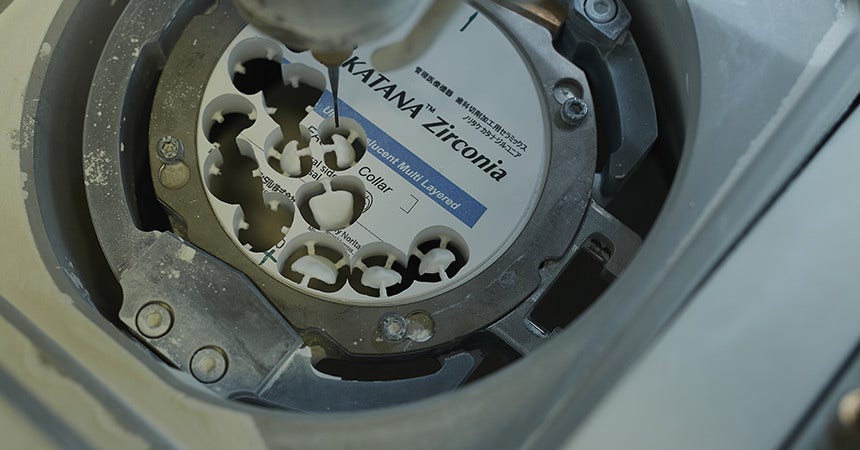
Kuraray Noritake Dental Inc. launched the zirconia disc that has been commercialized through the use of our layered ceramic production method in 2012. The product has multi-layered structure with four different colored zirconia powders that feature a smooth transition of color gradation between layers. We took advantage of the dental ceramic coloring technology we had accumulated through the development of porcelains. Success was achieved in controlling the shrinkage of the layers by optimizing the amounts of pigments added, thereby achieving great accuracy in terms of adaptation. In 2015, we also launched a new series zirconia which has the high degree of translucency of natural tooth enamel and is suitable for the esthetic restorations of anterior teeth. In January 2018, zirconia block joined the zirconia family as our new solution for the fabrication of zirconia restorations. This new product achieves a well-balanced combination of appropriate mechanical properties and good esthetics with a short baking time. Kuraray Noritake Dental Inc. is committed to developing new dental materials that contribute to the dental industry. Our products have become even more competitive on the global market because of our intense pursuit of technological innovation.
Kuraray Noritake Dental concludes a patent license agreement with 3M In March 2018, Kuraray Noritake Dental Inc. (President: Kiyoyuki Arikawa), with its Head Office in Chiyoda-ku, Tokyo, concluded a license agreement with the 3M Company, whose Head Office is in Saint Paul, Minnesota, USA. The agreement concerns a patented method for producing multilayered ceramics, European patent No. 2024300, held by Kuraray Noritake Dental Inc.
Summary of Kuraray Noritake Dental Inc. ceramic business
Kuraray Noritake Dental Inc. launched the zirconia disc that has been commercialized through the use of our layered ceramic production method in 2012. The product has multi-layered structure with four different colored zirconia powders that feature a smooth transition of color gradation between layers. We took advantage of the dental ceramic coloring technology we had accumulated through the development of porcelains. Success was achieved in controlling the shrinkage of the layers by optimizing the amounts of pigments added, thereby achieving great accuracy in terms of adaptation. In 2015, we also launched a new series zirconia which has the high degree of translucency of natural tooth enamel and is suitable for the esthetic restorations of anterior teeth. In January 2018, zirconia block joined the zirconia family as our new solution for the fabrication of zirconia restorations. This new product achieves a well-balanced combination of appropriate mechanical properties and good esthetics with a short baking time. Kuraray Noritake Dental Inc. is committed to developing new dental materials that contribute to the dental industry. Our products have become even more competitive on the global market because of our intense pursuit of technological innovation.
At Kuraray Noritake Dental, we understand that the most important factors for successful prostheses are strength and aesthetic appearance. With our KATANA Zirconia multi-layered series, we are proud to provide a range of materials with the translucency, colour gradient and durability to make every prosthesis as natural as possible, from veneers to full-contour restorations.
Launched in 2015, KATANA Zirconia UTML (Ultra Translucent Multi Layered) is the most translucent series at 43 per cent, a level equal to that of lithium disilicate or glass. This optimal translucency, combined with its natural colour gradient, allows the material to be used with confidence for veneers and crowns between natural teeth in the anterior region. KATANA Zirconia UTML is available in 20 shades in two shade groups (standard and enamel), with the reduced chroma of the enamel shades allowing for an enhancement of the translucency of the incisal area. As the flexural strength of KATANA Zirconia UTML—557 MPa—is 30 per cent higher than that of lithium disilicate, it can be reliably used to produce durable and aesthetic single restorations.
KATANA Zirconia STML (Super Translucent Multi Layered) likewise has a natural colour and translucency gradient that transmits light in the incisal area while blocking it in the cervical area. This provides clinicians with the basis for beautiful full-contour prostheses, regardless of the abutment colour. With a translucency of 38 per cent and a flexural strength of 748 MPa—even higher than that of UTML, this series is recommended for up to three-unit posterior bridges, as well as crowns in the anterior and posterior regions.
The KATANA Zirconia ML (Multi Layered) and HT (High Translucent) series possess a flexural strength of 1,125 MPa, providing the highest level of mechanical strength in the KATANA line. Ideal for frameworks and long-span bridges, this series has a translucency of 31 per cent and ensures the aesthetic appearance of zirconia required by Kuraray Noritake Dental.
Give your brush a break
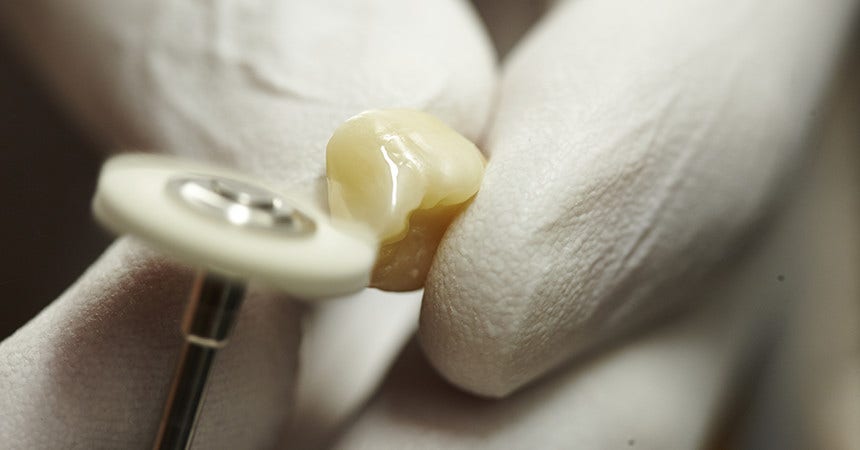
Often, the only way to ensure a prosthesis’s natural appearance is by dipping. With the KATANA Zirconia series, prostheses simply need to be milled and sintered to create natural aesthetics. To give them an even more natural look, the buccal surface can be stained with FC Paste Stain (Cerabien ZR).
Cementation with PANAVIA
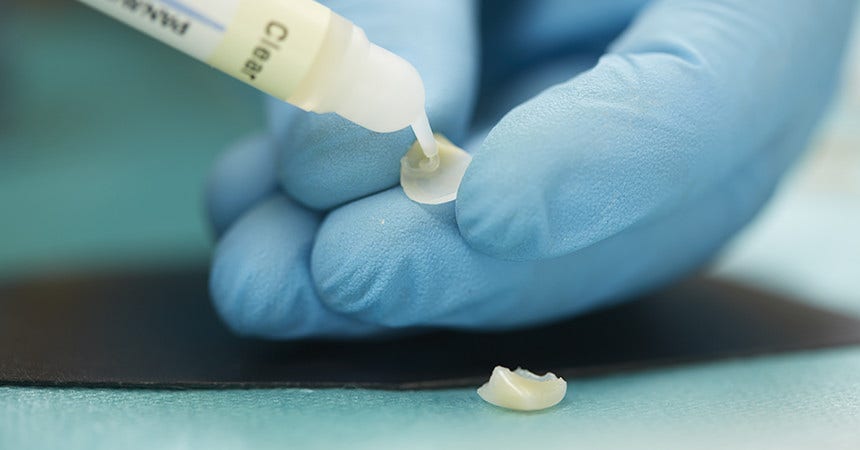
Built upon the foundation of our original MDP monomer, PANAVIA cements are the best option for cementing prostheses or bonding to zirconia in a dental practice or laboratory. Both PANAVIA V5, developed for all indications, and PANAVIA SA Cement Plus, designed for ease of use, utilise the MDP monomer and have high bond strength to zirconia and durability. With PANAVIA cements, restorations can be cemented adhesively, expanding the options for use with zirconia.
At Kuraray Noritake Dental, we understand that the most important factors for successful prostheses are strength and aesthetic appearance. With our KATANA Zirconia multi-layered series, we are proud to provide a range of materials with the translucency, colour gradient and durability to make every prosthesis as natural as possible, from veneers to full-contour restorations.
Launched in 2015, KATANA Zirconia UTML (Ultra Translucent Multi Layered) is the most translucent series at 43 per cent, a level equal to that of lithium disilicate or glass. This optimal translucency, combined with its natural colour gradient, allows the material to be used with confidence for veneers and crowns between natural teeth in the anterior region. KATANA Zirconia UTML is available in 20 shades in two shade groups (standard and enamel), with the reduced chroma of the enamel shades allowing for an enhancement of the translucency of the incisal area. As the flexural strength of KATANA Zirconia UTML—557 MPa—is 30 per cent higher than that of lithium disilicate, it can be reliably used to produce durable and aesthetic single restorations.
KATANA Zirconia STML (Super Translucent Multi Layered) likewise has a natural colour and translucency gradient that transmits light in the incisal area while blocking it in the cervical area. This provides clinicians with the basis for beautiful full-contour prostheses, regardless of the abutment colour. With a translucency of 38 per cent and a flexural strength of 748 MPa—even higher than that of UTML, this series is recommended for up to three-unit posterior bridges, as well as crowns in the anterior and posterior regions.
The KATANA Zirconia ML (Multi Layered) and HT (High Translucent) series possess a flexural strength of 1,125 MPa, providing the highest level of mechanical strength in the KATANA line. Ideal for frameworks and long-span bridges, this series has a translucency of 31 per cent and ensures the aesthetic appearance of zirconia required by Kuraray Noritake Dental.
Give your brush a break
Often, the only way to ensure a prosthesis’s natural appearance is by dipping. With the KATANA Zirconia series, prostheses simply need to be milled and sintered to create natural aesthetics. To give them an even more natural look, the buccal surface can be stained with FC Paste Stain (Cerabien ZR).
Cementation with PANAVIA
Built upon the foundation of our original MDP monomer, PANAVIA cements are the best option for cementing prostheses or bonding to zirconia in a dental practice or laboratory. Both PANAVIA V5, developed for all indications, and PANAVIA SA Cement Plus, designed for ease of use, utilise the MDP monomer and have high bond strength to zirconia and durability. With PANAVIA cements, restorations can be cemented adhesively, expanding the options for use with zirconia.
No other resin cement offers such ease of use and consistency in procedure. Indeed, the unrivalled simplicity and predictability of PANAVIA V5 is nothing less than astonishing.
Always the same cementation procedure. Always the special PANAVIA V5 Tooth Primer for the pretreatment of the tooth. And always CLEARFIL CERAMIC PRIMER PLUS to prime the restoration.
In 1983, Kuraray introduced the PANAVIA EX resin cement and, with it, our patented MDP adhesive monomer. Since then, the MDP monomer has repeatedly been clinically proved and has set the industry’s adhesive standard for over 30 years. PANAVIA V5 is the newest addition to the PANAVIA cement line and sets a new adhesive benchmark for resin cements by providing self-cure dentine bond strengths equal to our gold standard light-cure bonding agent CLEARFIL SE BOND.
PANAVIA V5 is able to provide strong bonding not just to hydroxyapatite but to metals and zirconia as well. It can be used for all clinical cementation indications, including on crowns, veneers, inlays/onlays, bridges, crowns/abutments on implants, and posts. With PANAVIA V5, you always follow the same procedures prior to prosthetic cementation: roughen and prime the prosthesis, prime the tooth, and apply the cement to the prosthesis.
Aesthetic stability in shading
When it comes to maintaining shade in aesthetic cementation, conventional composite cements tend to discolour over time. With PANAVIA V5, Kuraray Noritake Dental presents an amine-free paste in five different shades—Universal (A2), Clear, Brown (A4), White and Opaque (only in self-cure mode)—that has been scientifically proved to demonstrate a lower level of post-curing colour variance than amine-based cements do. In addition, the new PANAVIA V5 try-in paste allows you to accurately simulate the shading of your cementation before it has been performed. As part of Kuraray Noritake Dental’s continued commitment to excellence in adhesion, this combination aims to enable the continued stability and natural appearance of the cement shading after curing.
PANAVIA V5 Tooth Primer
Almost all dual-cure resin cements available have been scientifically demonstrated to require light curing to achieve an acceptable bond strength. Thanks to Kuraray Noritake Dental’s focus on research and development, the MDP monomer-based PANAVIA V5 Tooth Primer contains a new catalyst that solves this issue. It provides an accelerated curing process from the moment the cement touches the primer, which, in turn, leads to a high degree of conversion from monomer to polymer. PANAVIA V5 presents a milestone in adhesion, as it offers improved bond strength for all tooth structures, even when used in the self-cure mode.
Prime with CLEARFIL CERAMIC PRIMER PLUS
PANAVIA V5 is designed for use in conjunction with CLEARFIL CERAMIC PRIMER PLUS, a stable universal primer that contains both Kuraray Noritake Dental’s original MDP monomer and a silane monomer. This allows it to bond to all silica-based ceramics (including lithium disilicate), zirconia, composites and metals. It provides excellent bond strengths to all of these materials, as well as procedural simplicity.
When it comes to the aesthetic performance of restorations in the anterior region, a key aspect to consider is translucency—the ability of the material to let light pass through it without becoming transparent. As teeth are naturally quite translucent, it is often noticeable if a restoration is of a low-translucency material, as it will not blend in. In addition, if the material is of a different colour to the surrounding teeth, it will likely appear unnatural. As the originators of multi-layered zirconia technology, Kuraray Noritake Dental is proud to present our KATANA Zirconia range, a ceramic solution for restorative procedures that, owing to its superior translucency and variety of shade options, blends with the surrounding dentition perfectly.
Though it has been used in restorative dentistry since around 2000, zirconia’s popularity as a metal-free alternative has risen dramatically with the recent development of high-translucency options. Whereas older generations of this material possessed an unnatural, chalk-like whiteness that diminished its appearance, newer versions combine mechanical performance with visual superiority to effectively mimic the shading differences between the enamel and dentine layers. Our KATANA Zirconia line is at the forefront of this new standard, as its enamel-like translucency and durability make it suitable for full-contour zirconia crowns, veneers and inlays/onlays in the anterior region. KATANA Zirconia’s multi-layered technology builds upon our emphasis on research and development to provide a highly aesthetic and biocompatible restorative material.
A pioneering spirit
Much of the advancement in zirconia’s translucency has been the result of innovations in the powder that forms the basis of the discs. Whereas a vast majority of zirconia manufacturers rely on a single, shared provider of this powder, Kuraray Noritake Dental’s powder is proprietary and processed in-house. This pioneering spirit allows KATANA Zirconia to have as natural a translucency and colour as possible—the KATANA Zirconia UTML (Ultra Translucent Multi Layered) series possesses a translucency of 43 per cent and is available in 16 standard shades and four enamel shades, making it an ideal and harmonious fit for almost all anterior restorations between natural teeth.
Our KATANA Zirconia disc range consists of several options designed for full-contour zirconia prostheses, from single crown to full arch: KATANA Zirconia UTML, STML (Super Translucent Multi Layered), ML (Multi Layered) and HT (High Translucent). The multilayer build-up of KATANA Zirconia means that, like in natural dentition, the translucency of restorations made with this material is higher in the incisal than in the cervical areas. Each of the KATANA Zirconia series possesses different translucency and mechanical properties, allowing clinicians to cover a wide range of restorative cases in the anterior and posterior regions.
“The KATANA Zirconia range demonstrates our commitment to providing aesthetic and reliable products for clinicians worldwide,” said Eileen Tan, European Product Manager at Kuraray Dental Benelux. “With KATANA Zirconia, you can bring true naturalness to your prostheses.”
No other resin cement offers such ease of use and consistency in procedure. Indeed, the unrivalled simplicity and predictability of PANAVIA V5 is nothing less than astonishing.
Always the same cementation procedure. Always the special PANAVIA V5 Tooth Primer for the pretreatment of the tooth. And always CLEARFIL CERAMIC PRIMER PLUS to prime the restoration.
In 1983, Kuraray introduced the PANAVIA EX resin cement and, with it, our patented MDP adhesive monomer. Since then, the MDP monomer has repeatedly been clinically proved and has set the industry’s adhesive standard for over 30 years. PANAVIA V5 is the newest addition to the PANAVIA cement line and sets a new adhesive benchmark for resin cements by providing self-cure dentine bond strengths equal to our gold standard light-cure bonding agent CLEARFIL SE BOND.
PANAVIA V5 is able to provide strong bonding not just to hydroxyapatite but to metals and zirconia as well. It can be used for all clinical cementation indications, including on crowns, veneers, inlays/onlays, bridges, crowns/abutments on implants, and posts. With PANAVIA V5, you always follow the same procedures prior to prosthetic cementation: roughen and prime the prosthesis, prime the tooth, and apply the cement to the prosthesis.
Aesthetic stability in shading
When it comes to maintaining shade in aesthetic cementation, conventional composite cements tend to discolour over time. With PANAVIA V5, Kuraray Noritake Dental presents an amine-free paste in five different shades—Universal (A2), Clear, Brown (A4), White and Opaque (only in self-cure mode)—that has been scientifically proved to demonstrate a lower level of post-curing colour variance than amine-based cements do. In addition, the new PANAVIA V5 try-in paste allows you to accurately simulate the shading of your cementation before it has been performed. As part of Kuraray Noritake Dental’s continued commitment to excellence in adhesion, this combination aims to enable the continued stability and natural appearance of the cement shading after curing.
PANAVIA V5 Tooth Primer
Almost all dual-cure resin cements available have been scientifically demonstrated to require light curing to achieve an acceptable bond strength. Thanks to Kuraray Noritake Dental’s focus on research and development, the MDP monomer-based PANAVIA V5 Tooth Primer contains a new catalyst that solves this issue. It provides an accelerated curing process from the moment the cement touches the primer, which, in turn, leads to a high degree of conversion from monomer to polymer. PANAVIA V5 presents a milestone in adhesion, as it offers improved bond strength for all tooth structures, even when used in the self-cure mode.
Prime with CLEARFIL CERAMIC PRIMER PLUS
PANAVIA V5 is designed for use in conjunction with CLEARFIL CERAMIC PRIMER PLUS, a stable universal primer that contains both Kuraray Noritake Dental’s original MDP monomer and a silane monomer. This allows it to bond to all silica-based ceramics (including lithium disilicate), zirconia, composites and metals. It provides excellent bond strengths to all of these materials, as well as procedural simplicity.
When it comes to the aesthetic performance of restorations in the anterior region, a key aspect to consider is translucency—the ability of the material to let light pass through it without becoming transparent. As teeth are naturally quite translucent, it is often noticeable if a restoration is of a low-translucency material, as it will not blend in. In addition, if the material is of a different colour to the surrounding teeth, it will likely appear unnatural. As the originators of multi-layered zirconia technology, Kuraray Noritake Dental is proud to present our KATANA Zirconia range, a ceramic solution for restorative procedures that, owing to its superior translucency and variety of shade options, blends with the surrounding dentition perfectly.
Though it has been used in restorative dentistry since around 2000, zirconia’s popularity as a metal-free alternative has risen dramatically with the recent development of high-translucency options. Whereas older generations of this material possessed an unnatural, chalk-like whiteness that diminished its appearance, newer versions combine mechanical performance with visual superiority to effectively mimic the shading differences between the enamel and dentine layers. Our KATANA Zirconia line is at the forefront of this new standard, as its enamel-like translucency and durability make it suitable for full-contour zirconia crowns, veneers and inlays/onlays in the anterior region. KATANA Zirconia’s multi-layered technology builds upon our emphasis on research and development to provide a highly aesthetic and biocompatible restorative material.
A pioneering spirit
Much of the advancement in zirconia’s translucency has been the result of innovations in the powder that forms the basis of the discs. Whereas a vast majority of zirconia manufacturers rely on a single, shared provider of this powder, Kuraray Noritake Dental’s powder is proprietary and processed in-house. This pioneering spirit allows KATANA Zirconia to have as natural a translucency and colour as possible—the KATANA Zirconia UTML (Ultra Translucent Multi Layered) series possesses a translucency of 43 per cent and is available in 16 standard shades and four enamel shades, making it an ideal and harmonious fit for almost all anterior restorations between natural teeth.
Our KATANA Zirconia disc range consists of several options designed for full-contour zirconia prostheses, from single crown to full arch: KATANA Zirconia UTML, STML (Super Translucent Multi Layered), ML (Multi Layered) and HT (High Translucent). The multilayer build-up of KATANA Zirconia means that, like in natural dentition, the translucency of restorations made with this material is higher in the incisal than in the cervical areas. Each of the KATANA Zirconia series possesses different translucency and mechanical properties, allowing clinicians to cover a wide range of restorative cases in the anterior and posterior regions.
“The KATANA Zirconia range demonstrates our commitment to providing aesthetic and reliable products for clinicians worldwide,” said Eileen Tan, European Product Manager at Kuraray Dental Benelux. “With KATANA Zirconia, you can bring true naturalness to your prostheses.”
Peter Schouten, Technical Manager at Kuraray Europe Benelux
Before universal adhesives were available, two major techniques were used: total-etching adhesives, which basically work with phosphoric acid etching on enamel and dentine; and self-etching adhesives, which can be used with or without the option of etching enamel selectively. Prior to the introduction of self-etching adhesives in the late 1990s, dentists used mostly total-etching techniques. While this procedure achieves strong enamel bonding, it can also be very technique-sensitive and involves several steps. As a consequence, dentists welcomed the development of simplified adhesives. In 2011, the new generation of universal adhesives was introduced, with the aim of replacing all previous generations.
The development of universal adhesives was firstly due to the success of self-etching adhesives, but total etching was still advocated. The result, a universal adhesive, must be considered a self-etching adhesive with a phosphoric acid conditioning option on enamel and/or dentine. Maximum flexibility resulting from the freedom of choice in etching technique and the preference of the practitioner was thus obtained.
CLEARFIL Universal Bond Quick, manufactured by Kuraray Noritake Dental, is a single-component light-curing bonding agent indicated for all direct and indirect restorations in combination with all etching techniques (total-etching, self-etching or selective-etching). The adhesive is also indicated for the surface treatment of zirconia- and silica-based ceramics. When compared with other one-bottle universal adhesives, CLEARFIL Universal Bond Quick exhibits RAPID BOND TECHNOLOGY. We asked Peter Schouten, Technical Manager at Kuraray Europe Benelux and a chemist with decades of experience in the dental industry, about his views on universal adhesives and CLEARFIL Universal Bond Quick.
Dental Tribune: Since the introduction of the first universal adhesive, a new generation of adhesives has been created that has enjoyed increasing popularity since then. What is your opinion about the system?
Peter Schouten: For me, the term “universal” remains debatable. There is no clear definition of a universal bonding system yet. When we look at what different manufacturers are saying about universal bonding systems, the term to me applies primarily to the etching technologies and the ability to adhere to all substrates currently used in dentistry, such as silica- or metal-based materials. In this case, we can really speak of “universal”.
What are the advantages and disadvantages of self-etching and total-etching technologies? How are universal adhesives positioned in relation to them?
In my home country of the Netherlands, there is a large group of self-etching users. In many other countries, most dentists still use the total-etching approach. And, of course, there are reliable three-step total-etching systems on the market. However, etching of dentine removes hydroxyapatite and creates a layer of collagen. Afterwards, the dentist tries his or her best to penetrate this layer again with a bonding system. Why not preserve the hydroxyapatite and create a reliable bonding to the hydroxyapatite itself? This is the basis of the gold standard two-step self-etching bonding, our CLEARFIL SE BOND. Now universal adhesives—at least CLEARFIL Universal Bond Quick—provide the advantage that dentists can use any etching technique without worrying about results that are less than optimal. It really is an open system.
How do universal adhesives perform on wet and dry dentine, as well as enamel, in combination with all etching technologies?
I am a strong believer in the self-etching technique as we have proven already. The wetness and dryness of dentine is always an issue in total-etching techniques. With CLEARFIL Universal Bond Quick, the instruction is to rinse and dry. Our universal adhesive has the capability of penetrating the dentine surface quickly and completely.
Kuraray is a pioneer in adhesive systems: the company introduced total-etching bonding in the 1970s and innovative self-etching technology in the 1990s. The secret to success of all universal adhesives seems to be the incorporation of the adhesive molecule MDP (10-methacryloyloxydecyl dihydrogen phosphate) developed in 1981 by Kuraray. What is the function of MDP?
Kuraray has over 40 years of experience in the development of phosphate monomers. In 1976, we had already developed Phenyl-P. By far the most important ingredient in our current bonding systems is the original MDP. We never would have reached the level at which we are today without this phosphate monomer. MDP is capable of creating a long-lasting bond to calcium in hydroxyapatite and to other metals. As MDP can chemically bond to Ca2+ ions, it forms stable, insoluble MDP–Ca salts present as nano-layers at the adhesive interface.
Kuraray Noritake Dental introduced CLEARFIL Universal Bond Quick at this year’s International Dental Show. According to the company, CLEARFIL Universal Bond is the best one-step adhesive ever developed. Briefly, what do you find noteworthy about the bonding agent?
The most remarkable thing is RAPID BOND TECHNOLOGY, enabling us to introduce the benefit of no waiting. This technology works in three steps: first, rapid penetration; second, fast polymerisation; and third, quick formation of a hydrophobic, hydrolytically stable bonding layer. It took our research and development lead Dr Yamato Nojiri many years to develop a cocktail of amide monomers that is superhydrophilic and turns after curing into a stable hydrophobic polymer. The addition of this amide monomer makes it possible to skip the waiting step. Fast polymerisation is achieved by a modified photoinitiator, releasing twice as many radicals in comparison with other initiators. The quickly formed stable bond derives from the combined action of MDP and the amide monomer. MDP bonds to calcium and amide monomer turns into a highly cross-linked hydrophobic polymer network.
The motto of CLEARFIL Universal Bond Quick is “Universal. Easy. Reliable.” Could you please explain that further?
I think that clinicians will be very satisfied with the bonding agent’s performance and wide indication range. It definitely will be used mainly for direct restorations with light-curing composite resins, but also for core build-ups, cavity sealing, treatment of exposed root surfaces and hypersensitive teeth. The pretreatment of the tooth can be done with any of the three etching procedures before applying this adhesive. For selective enamel etching and total-etching, phosphoric acid needs to be applied. I recommend K-ETCHANT Syringe etching gel. It is left in place for 10 seconds, followed by rinsing and drying. The product is very easy to use and not technique-sensitive. The result is a reliable bond because of the use of our proven MDP technology combined with the cross-linked hydrophobic polymer network.
Does CLEARFIL Universal Bond Quick adhere to any dental substrate (lithium disilicate, zirconia and metals)?
Yes, it does. CLEARFIL Universal Bond Quick is the ideal bonding agent in most situations. Bonding to tooth structure and to most direct and indirect filling materials can be performed with CLEARFIL Universal Bond Quick. For the pretreatment of silica-based ceramics (glass-ceramics); however, we advise the use of CLEARFIL CERAMIC PRIMER PLUS for the most optimal results.
What is known regarding combining universal adhesives with light-curing, dual-curing and self-curing composites without the use of primers? Can the dentist really combine them without any problems?
It can be used with all light-curing composites and compomers, with the exception of silorane-based composites. For use with self- and dual-cure composites, CLEARFIL DC Activator is needed. This catalyst activates the dual-curing mechanism of this adhesive. However, the addition of CLEARFIL DC Activator to the adhesive is not required when using it with CLEARFIL DC CORE PLUS or PANAVIA SA Cement Plus.
What do you see for the future of universal adhesives?
As long as we still need adhesives to bond our composites to tooth structure, I'm almost certain that single-bottle universal adhesives will become the most used systems. In vitro tests have shown good results. A universal, easy-to-use adhesive with few treatment steps and a short working time reduces the risks of errors. Of course, relevant long-term clinical research results are needed to prove the quality. Kuraray Noritake Dental, with its leading adhesive technology, will surely remain the leader in this field.
We use cookies to improve your experience on our website If you click on "Accept", you consent to the storage of cookies on your device in order to improve website navigation, analyze website use and support our marketing efforts. Read more in our cookie declaration and privacy policy
Definições de biscoitos
Functional cookies are cookies that ensure the proper functioning of the Website (e.g. cookies for login or registration, language preferences) and their installation does not require your permission.
In our privacy policy you will learn in more detail how we make use of these cookies.
Leia mais
Statistic cookies are implemented so we can measure the use of the website.
To determine which parts of the website are most interesting to our visitors, we continuously try to measure how many visitors come to our website and which parts of the website are viewed the most by using the software of Google Analytics, Matomo and Hotjar.
We do this to keep track of web statistics. Statistics are made of the information we collect in this way. These statistics give us insight into how often our web pages are visited, where visitors spend the most time, and so on. This enables us to make the structure, navigation and content of the website as user-friendly as possible.
We cannot trace the statistics and other reports back to people. For this reason, analytical cookies do not require consent and cannot be turned off.
In our privacy policy you will learn in more detail how we make use of these cookies.
Leia mais
After your permission, tracking cookies are placed on your equipment. We use these cookies to keep track of which pages you visit in order to understand your online behavior better.
We combine data to build personal profiles of you, so that we can approach you more specifically with content, newsletters, offers or promotions. This allows us to show more personalized offers and information within our websites and newsletters.
In our privacy policy you will learn in more detail how we make use of these cookies.
Leia mais