No Author Selected

Recording - 20.05.2020 15.00 CET - Dr Josef Kunkela on Mind the Gap!

Mind the Gap!

Webinar about the key factors which influence the gap between the margin of prepared tooth and restoration, also about accuracy evaluations of milled materials and resin cement removal techniques during cementation.


Dr JOSEF KUNKELA, DMD, PHD

1993
Dentistry graduate of First Medical Faculty of Charles University, Prague, Czech Republic

1995
Fellow in Medical Faculty of Charles University Prosthodontic Department in Hradec Králové, Czech Republic

1999
Gained Second Degree Specialization in Prosthodontics

2001
Named external teacher of the Prosthodontic Department at the Charles University Clinic of Dentistry in Hradec Králové and Palacky University in Olomouc, Czech republic

2009
Named president of Czech Society of CAD/CAM Dentistry

2010
Founder of KUNKELA Campus, International CAD/CAM Traning Center in Jindrichuv Hradec, Czech Republic (Certified Exclusive DentsplySirona Training Center)

2018
Finished postgraduate doctoral degree PhD, thesis Dental Office Management and Marketing (University of Economics Prague)


Certified CEREC trainer by the International Society of Computerized Dentistry (ISCD)

Member of DSD (Digital Smile Design) Master Team

Member of MicroVision Group

Member of SKYN Concept Team

Member of Academy of Digital Dentistry

Board Member of ADDA (Association of Digital Dentistry Academies)

Ambassador of DDS (Digital Dentistry Society)

CEREC Beta Tester

CEREC Guide Beta Tester

CEREC Advocate

Key Opinion Leader in the area of digital dentistry

International speaker at the field of Digital Dentistry, Guided Implantology, Management & Marketing

RECORDING - 20.05.2020 15.00 CET - Dr Josef Kunkela on Mind the Gap!

Mind the Gap!

Webinar about the key factors which influence the gap between the margin of prepared tooth and restoration, also about accuracy evaluations of milled materials and resin cement removal techniques during cementation.


Dr JOSEF KUNKELA, DMD, PHD

1993
Dentistry graduate of First Medical Faculty of Charles University, Prague, Czech Republic

1995
Fellow in Medical Faculty of Charles University Prosthodontic Department in Hradec Králové, Czech Republic

1999
Gained Second Degree Specialization in Prosthodontics

2001
Named external teacher of the Prosthodontic Department at the Charles University Clinic of Dentistry in Hradec Králové and Palacky University in Olomouc, Czech republic

2009
Named president of Czech Society of CAD/CAM Dentistry

2010
Founder of KUNKELA Campus, International CAD/CAM Traning Center in Jindrichuv Hradec, Czech Republic (Certified Exclusive DentsplySirona Training Center)

2018
Finished postgraduate doctoral degree PhD, thesis Dental Office Management and Marketing (University of Economics Prague)


Certified CEREC trainer by the International Society of Computerized Dentistry (ISCD)

Member of DSD (Digital Smile Design) Master Team

Member of MicroVision Group

Member of SKYN Concept Team

Member of Academy of Digital Dentistry

Board Member of ADDA (Association of Digital Dentistry Academies)

Ambassador of DDS (Digital Dentistry Society)

CEREC Beta Tester

CEREC Guide Beta Tester

CEREC Advocate

Key Opinion Leader in the area of digital dentistry

International speaker at the field of Digital Dentistry, Guided Implantology, Management & Marketing

Clinical case with CLEARFIL MAJESTY™ ES-2

By Drs. Mart Ramaekers


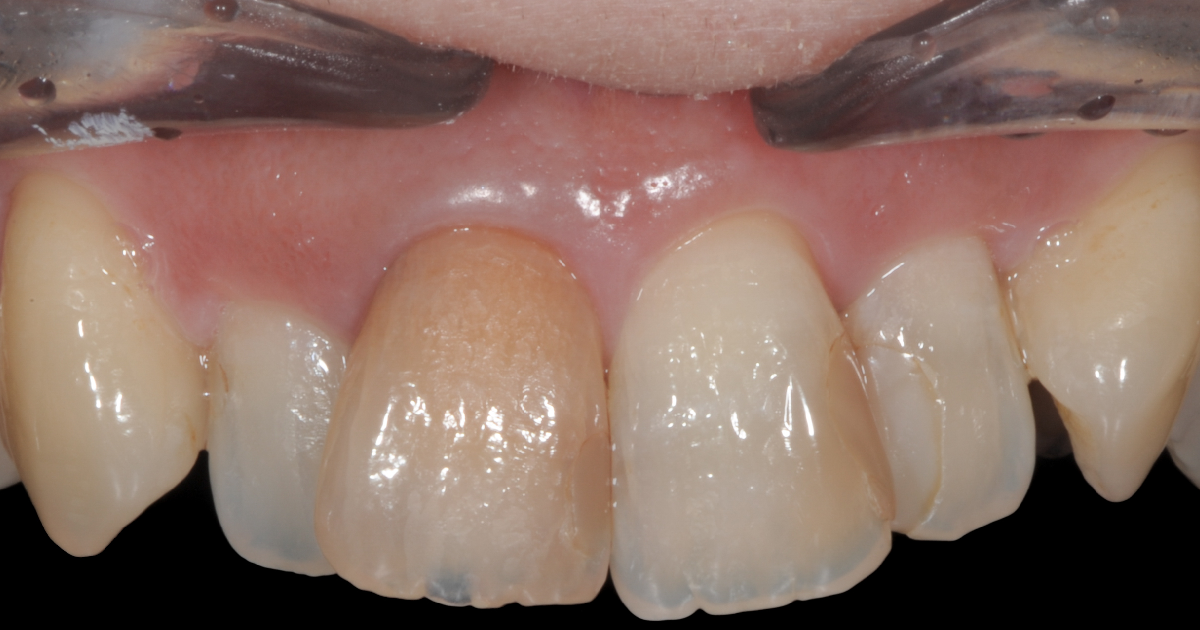
A 20-year-old patient was dissatisfied with her discolored composite restorations on her maxillary central incisors and the right lateral incisor. The original restorations had been placed after an accident with traumatic dental injuries approximately five years ago. We went through all available options that would enable us to improve the aesthetics of her anterior teeth and finally opted for replacement of the existing restorations by new direct restorations made of composite resin.


Prior to the restorative procedure, a home bleaching procedure was carried out with Opalescence 10% (Ultradent). In addition, a palatal silicon index was produced to record the shape and morphology of the existing restorations and dentition.


Initial situation

Frontal view of the initial situation.

Lateral view: The discolorations are particularly visible on the maxillary right central and lateral incisor.

Close-up view of the upper anterior teeth.

The existing restorations were removed after the administration of local anesthesia. Then, labial and palatal bevels were created, followed by sandblasting of the prepared tooth structure with alumina (50 μm). Hereafter, the enamel was etched for 30 seconds (K-Etchant Syringe, Kuraray Noritake Dental), before the primer and bond of CLEARFIL™ SE BOND (Kuraray Noritake Dental) were used according to the instructions.

Build-up of the palatal walls with a first increment of ‘enamel’ composite (CLEARFIL MAJESTY™ ES-2 Premium A2E, Kuraray Noritake Dental) using the silicon index.

Creation of the mesial and distal marginal ridges in A2E enamel composite. The procedure was facilitated by the vertical placement of sectional matrices (Contact Matrices Stiff Flex Large, Danville) in the interproximal space.

Creation of the dentin core and the dentinal mamelons by placement of an opaque composite increment (CLEARFIL MAJESTY™ ES-2 Premium, A2D). It increases the opacity in the middle third of the restoration.

Filling of the space between the mamelons with translucent composite (CLEARFIL MAJESTY™ ES-2 Premium, Translucent Clear).

Labial finishing of the restorations with a layer of semi-translucent composite (CLEARFIL MAJESTY™ ES-2 Premium, A2E).

Application of glycerin gel on top of the last layer of composite to prevent formation of an oxygen inhibited layer during the final light-curing procedure. Final contouring and polishing were performed by using red (fine) and yellow (x-fine) finishing diamonds followed by high gloss polishing with CLEARFIL™ TWIST DIA (Kuraray Noritake Dental).


Final situation

Frontal view of the final situation.

Lateral view: No shade differences or restoration margins are visible.

Close-up view of the new restorations on the upper anterior teeth.


Ceramist:

Drs. Mart Ramaekers

Academic education
2002 - 2007   Tandheelkunde, Radboud Universiteit Nijmegen

Non-academic education
2013 - 2014   Academy of Reconstructive Dentistry, Beuningen
2019              Biomimetic Dentistry, Los Angeles

Career
2008 - 2013    Mondzorg Jekerdal Maastricht
2013 - 2015    De Drietand Maastricht
2009 - 2020    Amalia Kliniek Kerkrade
2020 - now      Espenbos Kliniek Cadier en Keer


Materials used: Kuraray Noritake Dental: CLEARFIL™ SE BOND 2, K-Etchant Syringe, CLEARFIL MAJESTY™ ES-2 Premium Enamel A2E, CLEARFIL MAJESTY™ ES-2 Premium Dentin A2D , CLEARFIL MAJESTY™ ES-2 Premium Translucent Clear and CLEARFIL™ TWIST DIA. Heavy Putty (Provil Novo, Heraeus Kulzer), Glycerine gel (K-Yelly Johnson&Johnson), Rubberdam non-latex Heavy (Sigma), Contact Matrices Stiff Flex Large (Danville), Optragate Regular (Ivoclar)


 

CLINICAL CASE WITH CLEARFIL MAJESTY™ ES-2

By Drs. Mart Ramaekers


A 20-year-old patient was dissatisfied with her discolored composite restorations on her maxillary central incisors and the right lateral incisor. The original restorations had been placed after an accident with traumatic dental injuries approximately five years ago. We went through all available options that would enable us to improve the aesthetics of her anterior teeth and finally opted for replacement of the existing restorations by new direct restorations made of composite resin.


Prior to the restorative procedure, a home bleaching procedure was carried out with Opalescence 10% (Ultradent). In addition, a palatal silicon index was produced to record the shape and morphology of the existing restorations and dentition.


Initial situation

Frontal view of the initial situation.

Lateral view: The discolorations are particularly visible on the maxillary right central and lateral incisor.

Close-up view of the upper anterior teeth.

The existing restorations were removed after the administration of local anesthesia. Then, labial and palatal bevels were created, followed by sandblasting of the prepared tooth structure with alumina (50 μm). Hereafter, the enamel was etched for 30 seconds (K-Etchant Syringe, Kuraray Noritake Dental), before the primer and bond of CLEARFIL™ SE BOND (Kuraray Noritake Dental) were used according to the instructions.

Build-up of the palatal walls with a first increment of ‘enamel’ composite (CLEARFIL MAJESTY™ ES-2 Premium A2E, Kuraray Noritake Dental) using the silicon index.

Creation of the mesial and distal marginal ridges in A2E enamel composite. The procedure was facilitated by the vertical placement of sectional matrices (Contact Matrices Stiff Flex Large, Danville) in the interproximal space.

Creation of the dentin core and the dentinal mamelons by placement of an opaque composite increment (CLEARFIL MAJESTY™ ES-2 Premium, A2D). It increases the opacity in the middle third of the restoration.

Filling of the space between the mamelons with translucent composite (CLEARFIL MAJESTY™ ES-2 Premium, Translucent Clear).

Labial finishing of the restorations with a layer of semi-translucent composite (CLEARFIL MAJESTY™ ES-2 Premium, A2E).

Application of glycerin gel on top of the last layer of composite to prevent formation of an oxygen inhibited layer during the final light-curing procedure. Final contouring and polishing were performed by using red (fine) and yellow (x-fine) finishing diamonds followed by high gloss polishing with CLEARFIL™ TWIST DIA (Kuraray Noritake Dental).


Final situation

Frontal view of the final situation.

Lateral view: No shade differences or restoration margins are visible.

Close-up view of the new restorations on the upper anterior teeth.


Ceramist:

Drs. Mart Ramaekers

Academic education
2002 - 2007   Tandheelkunde, Radboud Universiteit Nijmegen

Non-academic education
2013 - 2014   Academy of Reconstructive Dentistry, Beuningen
2019              Biomimetic Dentistry, Los Angeles

Career
2008 - 2013    Mondzorg Jekerdal Maastricht
2013 - 2015    De Drietand Maastricht
2009 - 2020    Amalia Kliniek Kerkrade
2020 - now      Espenbos Kliniek Cadier en Keer


Materials used: Kuraray Noritake Dental: CLEARFIL™ SE BOND 2, K-Etchant Syringe, CLEARFIL MAJESTY™ ES-2 Premium Enamel A2E, CLEARFIL MAJESTY™ ES-2 Premium Dentin A2D , CLEARFIL MAJESTY™ ES-2 Premium Translucent Clear and CLEARFIL™ TWIST DIA. Heavy Putty (Provil Novo, Heraeus Kulzer), Glycerine gel (K-Yelly Johnson&Johnson), Rubberdam non-latex Heavy (Sigma), Contact Matrices Stiff Flex Large (Danville), Optragate Regular (Ivoclar)
 

The universal alternative to cleaning with phosphoric acid

Phosphoric acid is not only used for etching enamel and dentin surfaces within dental bonding procedures, but also frequently as an intra- and extra-oral cleaning agent for tooth structure and dental restorations. But is phosphoric acid always the right choice?


Direct Restorations

Many bonding procedures are performed using self-etch adhesive systems. When applied to the prepared tooth surface, the acidic monomers in the primer and/or the bond partially remove and modify the smear layer, resulting in a thin hybrid layer. A substantial amount of hydroxyapatite crystals remain on the slightly etched surface, enabling both chemical and mechanical adhesion between the adhesive and the dental tissue. If the bonding surface in the cavity is contaminated e.g. with blood or saliva, and phosphoric acid is applied for cleaning and decontamination, it etches the tooth structure, too, resulting in the removal of HAp. This will prevent the desired chemical adhesion, between the bonding system and the tooth, which may lead to compromised bond strength. Hence, cleaning with phosphoric acid may have a negative effect in this context and cannot be recommended.


Great cleaning results with no negative effect on the performance of the dental adhesive are obtained with the universal cleaning solution KATANA™ Cleaner. It contains an MDP salt of triethanolamine (MDP-TEA), as well as 'free' MDP. With a pH of 4.5, KATANA™ Cleaner is essentially neutral, meaning that, unlike phosphoric acid, it does not remove hydroxyapatite from the tooth. However, it does still effectively eliminate any saliva and/or blood contamination.


Indirect Restorations

For materials containing glass, such as lithium disilicate and feldspathic porcelain, phosphoric acid is a tried-and-tested agent for removing contamination, such as deposits produced when etching these materials with hydrofluoric acid. However, routine use of phosphoric acid to remove contamination from indirect restorations may not be wise. In fact, its use on zirconia is not recommendable, as it could inhibit the desired chemical adhesion of phosphate monomers in the bonding agent to the surface of the zirconia restoration.


When cementing prosthetics using self-adhesive resin cements like PANAVIA™ SA Cement Universal or cements that use self-etching primers (e.g. PANAVIA™ F2.0 or PANAVIA™ V5), the use of phosphoric acid on dentin is not recommended for the same reasons as in the case of direct restorations.


No pitfalls, no restrictions

Unlike 35% phosphoric acid, KATANA™ Cleaner is a product that cleans reliably without inducing negative side effects – independent of the type of tooth structure, kind of restorative material and planned bonding procedure. Hence, it is a universal cleaning solution that allows you to streamline your procedures.


The universal alternative to cleaning with phosphoric acid

Phosphoric acid is not only used for etching enamel and dentin surfaces within dental bonding procedures, but also frequently as an intra- and extra-oral cleaning agent for tooth structure and dental restorations. But is phosphoric acid always the right choice?


Direct Restorations

Many bonding procedures are performed using self-etch adhesive systems. When applied to the prepared tooth surface, the acidic monomers in the primer and/or the bond partially remove and modify the smear layer, resulting in a thin hybrid layer. A substantial amount of hydroxyapatite crystals remain on the slightly etched surface, enabling both chemical and mechanical adhesion between the adhesive and the dental tissue. If the bonding surface in the cavity is contaminated e.g. with blood or saliva, and phosphoric acid is applied for cleaning and decontamination, it etches the tooth structure, too, resulting in the removal of HAp. This will prevent the desired chemical adhesion, between the bonding system and the tooth, which may lead to compromised bond strength. Hence, cleaning with phosphoric acid may have a negative effect in this context and cannot be recommended.


Great cleaning results with no negative effect on the performance of the dental adhesive are obtained with the universal cleaning solution KATANA™ Cleaner. It contains an MDP salt of triethanolamine (MDP-TEA), as well as 'free' MDP. With a pH of 4.5, KATANA™ Cleaner is essentially neutral, meaning that, unlike phosphoric acid, it does not remove hydroxyapatite from the tooth. However, it does still effectively eliminate any saliva and/or blood contamination.


Indirect Restorations

For materials containing glass, such as lithium disilicate and feldspathic porcelain, phosphoric acid is a tried-and-tested agent for removing contamination, such as deposits produced when etching these materials with hydrofluoric acid. However, routine use of phosphoric acid to remove contamination from indirect restorations may not be wise. In fact, its use on zirconia is not recommendable, as it could inhibit the desired chemical adhesion of phosphate monomers in the bonding agent to the surface of the zirconia restoration.


When cementing prosthetics using self-adhesive resin cements like PANAVIA™ SA Cement Universal or cements that use self-etching primers (e.g. PANAVIA™ F2.0 or PANAVIA™ V5), the use of phosphoric acid on dentin is not recommended for the same reasons as in the case of direct restorations.


No pitfalls, no restrictions

Unlike 35% phosphoric acid, KATANA™ Cleaner is a product that cleans reliably without inducing negative side effects – independent of the type of tooth structure, kind of restorative material and planned bonding procedure. Hence, it is a universal cleaning solution that allows you to streamline your procedures.


Clinical case - Porcelain fused to KATANA™ Zirconia restoration for central incisor

CERABIEN™ ZR
High translucent and opal porcelain for True-to-life, highly aesthetic restoration.


Blue-tinged light translucency at incisor edge of enamel was reproduced with LTx and LT Royal Blue.


Initial situation.

LTx and LT Royal Blue were used at the incisor edges to reproduce the bluish opalescence and translucency effect.


Step 1: Build-up of internal structures.

In order to reproduce the mamelon structure with stain and dentin color, Internal Stains were applied, then baked.


Step 2: Applied the first Internal Stain, then baked it.

In order to reproduce the stain in the internal enamel structure, Luster porcelains were applied and baked as a base.


Step 3: Applied the first enamel structure, then baked.

In order to reproduce the white spot and the incisor halo, Internal Stains were applied before baking.


Step 4: Applied the second Internal Stain before baking it.

To reproduce the subtle color and translucency of enamel, Luster porcelains were applied before baking.


Step 5: Applied the second enamel structure before baking it.


Step 6: Final situation.


Photos: Courtesy of Otani Dental Clinic, MDT Ryuzo Shiba and MDT Naoto Yuasa.


Clinical case - Porcelain fused to KATANA™ Zirconia restoration for central incisor

CERABIEN™ ZR
High translucent and opal porcelain for True-to-life, highly aesthetic restoration.


Blue-tinged light translucency at incisor edge of enamel was reproduced with LTx and LT Royal Blue.


Initial situation.

LTx and LT Royal Blue were used at the incisor edges to reproduce the bluish opalescence and translucency effect.


Step 1: Build-up of internal structures.

In order to reproduce the mamelon structure with stain and dentin color, Internal Stains were applied, then baked.


Step 2: Applied the first Internal Stain, then baked it.

In order to reproduce the stain in the internal enamel structure, Luster porcelains were applied and baked as a base.


Step 3: Applied the first enamel structure, then baked.

In order to reproduce the white spot and the incisor halo, Internal Stains were applied before baking.


Step 4: Applied the second Internal Stain before baking it.

To reproduce the subtle color and translucency of enamel, Luster porcelains were applied before baking.


Step 5: Applied the second enamel structure before baking it.


Step 6: Final situation.


Photos: Courtesy of Otani Dental Clinic, MDT Ryuzo Shiba and MDT Naoto Yuasa.


Recording - 06.05.2020 15.00 - Roberto Rossi on Ultra Microlayering

New liquid ceramic FC Paste Stain for full-contour solutions with KATANA Multi-layered Zirconia - Features and 3D-technique.


ROBERTO ROSSI 

"YOU CAN’T STOP THE WAVES, BUT YOU CAN LEARN TO SURF"

Born in Savona in 1989, he studied and got his diploma at “Mazzini” Dental School, the one dental school in his hometown, and he still lives there. In 2007 he was awarded the National Award for Best Dental Technician in Turin. Since 2008 he has been working at Daniele Rondoni’s Dental Lab and he is now in charge of the aesthetic planning of dental restorations. He shares this task with Master Dental Technician Daniele Rondoni, with whom he decides which strategy and materials – composites or ceramic especially – to opt for. In 2011 he coauthored with Mr. Rondoni “Sei faccette additive in composito” (Six additional composite facets), an article published in Dental Labor, 5/2011. A teacher at NISC, Noritake Italian Study Club since 2014, he is also a teacher at the AAT Community College – a reality he feels especially attached to – and he is in charge of the photographic services and social network profiling of the lab.

RECORDING - 06.05.2020 15.00 - Roberto Rossi on Ultra Microlayering

New liquid ceramic FC Paste Stain for full-contour solutions with KATANA Multi-layered Zirconia - Features and 3D-technique.


ROBERTO ROSSI 

"YOU CAN’T STOP THE WAVES, BUT YOU CAN LEARN TO SURF"

Born in Savona in 1989, he studied and got his diploma at “Mazzini” Dental School, the one dental school in his hometown, and he still lives there. In 2007 he was awarded the National Award for Best Dental Technician in Turin. Since 2008 he has been working at Daniele Rondoni’s Dental Lab and he is now in charge of the aesthetic planning of dental restorations. He shares this task with Master Dental Technician Daniele Rondoni, with whom he decides which strategy and materials – composites or ceramic especially – to opt for. In 2011 he coauthored with Mr. Rondoni “Sei faccette additive in composito” (Six additional composite facets), an article published in Dental Labor, 5/2011. A teacher at NISC, Noritake Italian Study Club since 2014, he is also a teacher at the AAT Community College – a reality he feels especially attached to – and he is in charge of the photographic services and social network profiling of the lab.