Peter Schouten is Technical Manager at Kuraray Noritake Dental. As a chemical analyst, he uses his chemical background to provide insight at first sight into complex (product) technologies. His passion lies in easily communicating and sharing information about the application of products and techniques.
I am frequently asked questions about the intraoral repair of porcelain chippings. To achieve success in repairs, it is essential to consider several important issues.
Perhaps the single most crucial issue to recognise is why the chipping occurred in the first place. For example, if loading stress is the leading cause, this should be considered during the repair.
Other issues to consider are removal of contamination, optimal roughening and chemical activation of the surface, and the prevention of contamination during the repair. Also, a rubber dam should be used to isolate the working field.
FUNDAMENTALS OF ADHESION
Adhesive procedures can be only successful by using the proper substances and methods. Different kinds of surfaces often need different treatments for success. However, the three basic fundamentals of adhesion must be respected to achieve the best results.
1) Mechanical retention through a roughened surface.
2) Chemical activation through chemically active substances.
3) High energetic bonding surface allowing for optimal interaction (wetting capacity) between the surface and the applied medium. Contamination will lower the bonding capacities and must be avoided or removed in any case.
TYPES OF FRACTURE
The most frequent fractures are porcelain only and those that include exposure of the substructure in PFZ or PFM prosthesis.
Many cases present with only limited chipping to the porcelain, for example, at the incisal edge. To achieve a durable repair in this instance, start by increasing the bonding/repair area using a fine diamond burr to create a large bevel. A fine grit burr is preferable over a medium or coarse version because a higher number of shallow grooves deliver a more optimal bonding surface than lesser deeper ones do. Additional roughening of the adherent surface by sandblasting with alumina (50 µm grain size, 2 bar pressure) is highly recommended to increase the surface area further.
When repairing porcelain chippings where the substructure is exposed, it is essential to be aware that multiple substrates are dealt with, indicating a need to adjust the repair protocol accordingly.
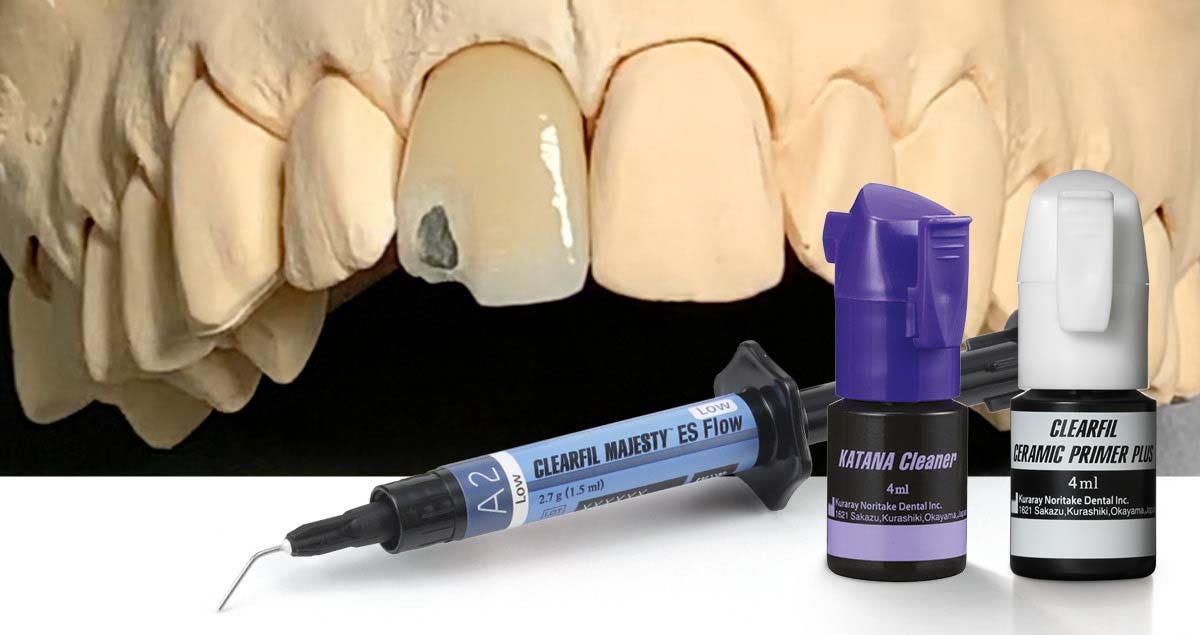
Clean the roughened fractured surface thoroughly. KATANA™ Cleaner is the product of choice. It is a safe and easy to use product with high cleaning power. It can be used both intra and extra orally on all kinds of dental substrates. After rinsing and thorough drying, the surface is ready for the next step, chemical activation.
CLEARFIL™ CERAMIC PRIMER PLUS contains both silane and MDP and effectively treats both silica-containing ceramics and metal oxides (zirconia) and metals. After application and thorough drying, the composite restoration can be carried out immediately without an extra bonding step. The composite of choice is a durable flowable, CLEARFIL MAJESTY™ ES Flow. It has high flexural strength, even higher than most paste-type composites. Besides that, it adapts to the surface better and easier. Quick and easy polishing and gloss retention are other highly valuated qualities of CLEARFIL MAJESTY™ ES Flow.
HINTS AND TIPS
Isolate the working field by using rubber dam
Bevel the chipping extensively using a fine diamond burr
Roughen the adherent surface, preferably by sandblasting
Clean the bonding area with KATANA™ Cleaner
Apply CLEARFIL™ CERAMIC PRIMER PLUS to the entire bonding area (including exposed zirconia or metal) and dry thoroughly
Cover exposed metal with a thin layer of CLEARFIL™ ST OPAQUER and light cure
Repair with a strong flowable composite, such as CLEARFIL MAJESTY™ ES Flow
We've seen them all: composite fillings that function present clinically, but are too ‘visible’ to be called aesthetic. The much-used term 'white filling' is probably quite appropriate here. In comparison to the tooth structure, these restorations are too opaque, or sometimes too transparent.
How much better would it be if the composite helped to create a seamless transition between tooth structure and composite? The so-called 'blending'.
But what enables this 'blending’ of composite and tooth structure to occur? The secret lies in utilizing the right mix of different filler particles and resins which give CLEARFIL MAJESTY™ ES-2 its light-diffusing properties. By varying the proportion of light-diffusing particles and the amount of pigment, it's possible to create composites with differing light-scattering properties and opacities. The most opaque variants contain more light-diffusing particles and more pigment. The more translucent ones contain obviously less.
All CLEARFIL MAJESTY™ ES-2 variants have the same filler content. This is important, as it means that the mechanical properties of all the CLEARFIL MAJESTY™ ES-2 variants are the same. The more translucent variants contain more barium glass than the more opaque variants. A higher barium glass content can lead to a less workable composite. With CLEARFIL MAJESTY™ ES-2, this is not the case. Kuraray has mastered the silanization process to such an extent that all variants, whether translucent or opaque, have the same filler amount, without compromising on workability.
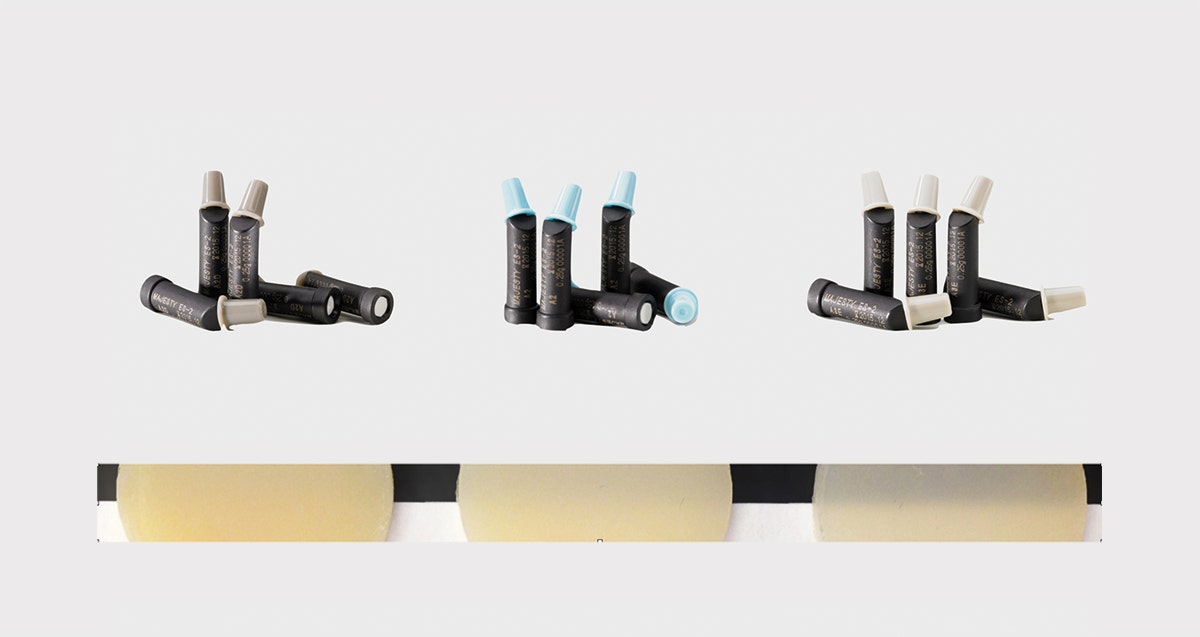
Light diffusion test
Light diffusion properties are easy to see if the thin composite slices are placed on a black and white paper background and then held a few millimeters above the paper. Composites with high diffusion properties make the black strip virtually invisible. They blend in more readily with their surroundings.
With CLEARFIL MAJESTY™ ES-2, the shade transition from composite to tooth is virtually invisible. The secret to this lies in light diffusion technology. How does this work?
Before we discuss the technology in detail, here are some more information about our CLEARFIL MAJESTY™ ES-2 composites. All CLEARFIL MAJESTY™ ES-2 composites are suitable for both anterior and posterior applications. The different variants within the ES-2 family are characterized by supreme handling and a long working time, and the fact that they do not slump during modeling. A key feature of these composites is the ease with which restorations blend into their surroundings. This results in durable and aesthetic restorations.
In CLEARFIL MAJESTY™ ES-2 composites, two types of fillers are used. Barium glass particles form the basis of the filler. Alongside this, advanced prepolymerized filler particles are added. The latter type is called light diffusion filler, since it is primarily these filler particles that achieve a light-scattering effect within the composite.
The way in which a restoration 'adjusts itself', to the shade of the tooth to be restored, is not the same for all composites. Most composite manufacturers make use of the so-called 'chameleon effect'. A composite that is sufficiently translucent allows light to pass through. Light is reflected off the walls of the cavity, whereby the composite restoration assumes the shade of the adjacent tooth structure.
In cavities that aren't too large with a sufficient amount of surrounding tooth structure, this chameleon effect works well enough. However, with larger cavities or in the absence of underlying tooth structure, as is often the case with anterior restorations, the aesthetic blending effect is limited. The brightness is far from satisfactory, and the restoration looks gray.
At Kuraray Noritake Dental Inc., we do things differently.
Besides the optimized translucency in CLEARFIL MAJESTY™ ES-2 composites, it's the light diffusion technology that makes the restoration blend seamlessly with the adjacent tooth structure. Thanks to the combination of these two parameters — translucency and light diffusion — the capabilities are far more extensive than with just translucency.
The different dental tissues have different opacities. Enamel is more translucent than dentin. However, the degree of translucency/opacity of both tissues is not always the same. Age, thickness of the structure and various intrinsic and extrinsic factors all play a role.
Depending on the desired end result, the most appropriate member(s) of the CLEARFIL MAJESTY™ ES-2 family is/are selected for the restoration.
In aesthetic restorations in which opacity differences need to be considered, a layering system is necessary. More uniform restorations are easily constructed with a composite that has broad shade and opacity coverage.
CLEARFIL MAJESTY™ ES-2 Premium for highly esthetic restorations.
CLEARFIL MAJESTY™ ES-2 Universal for routine aesthetic restorations involving few or no opacity differences.
The introduction of universal composites, which are not only universal in terms of application range but also in terms of shade adaptation, effectively marks the dawn of a new type of composite. This prompts a reinterpretation of the term "universal composite."
CLEARFIL MAJESTY™ ES-2 is a nanohybrid composite family. Nowadays, nanohybrid composites are commonly used as universal composites. They have a high filler content, they are strong, and they have exceptionally good polishability characteristics1.
The newest variant in the CLEARFIL MAJESTY™ ES-2 range is CLEARFIL MAJESTY™ ES-2 Universal shade concept. For this composite; we expand the definition of universal and include shade coverage.
Posteriorly, a single material in a single shade is sufficient to cover the entire VITA™ range. This means that no shade determination is required. For the anterior zone, we offer two shade variants: a lighter and a darker variant (UL and UD). The lighter variant is used in the A1-A2 range and the darker for shades from A3 onwards. There is sufficient overlap between UL and UD ensuring no specific shade determination is necessary.
Finally, for situations that require extra lightness and brightness, an additional UW shade is available.
What makes CLEARFIL MAJESTY™ ES-2 Universal unique in comparison to other universal or single-shade composites? The difference with CLEARFIL MAJESTY™ ES-2 Universal, is that without using an additional opaque composite, sometimes called a blocker, a successful, superbly matching restoration can be constructed. Not only with smaller cavities, but also with larger class I and II restorations. And, when used anteriorly, even an extensive Class IV restoration can be successfully constructed using CLEARFIL MAJESTY™ ES-2 Universal. So, it is not only for those small class III or V lesions.
Why Kuraray Noritake Dental Inc. can do this where others cannot, is to a large extent, thanks to optimized light diffusion technology (LDT). By using this technology in composites with the right translucency, the light is scattered and reflected in such a way that the composite blends in with the surrounding tooth structure.
Where others use the widely-employed chameleon effect, Kuraray Noritake Dental Inc. adds an extra dimension in the form of LDT. With the chameleon effect, light passes through the material and is reflected off the walls of the cavity. The perceived shade of the restoration is therefore the shade of the cavity walls. If the cavity is too large, thus requiring a larger amount of filling material, the light has to travel further and a large proportion of the light is absorbed. With this, the brightness of the restoration is reduced and the shade of the cavity walls no longer accurately reflected.
Our LDT allows light to be scattered within the composite itself, in addition to being reflected off the cavity walls. As a result, CLEARFIL MAJESTYTM ES-2 Universal is a particularly forgiving composite. This feature will be familiar to those who have used CLEARFIL MAJESTY™ ES-2 family products before.
CLEARFIL MAJESTY™ ES-2 Universal is the result of sophisticated filler, matrix and silane technology. It offers a solution for all your routine composite work. A consistently superb restoration where shade determination is a thing of the past.
Reference
1 Ilie, N., & Hickel, R. (2011). Resin composite restorative materials. Aust Dent J, 56 Suppl 1, 59-66. doi:10.1111/j.1834-7819.2010.01296.x
Technological progress has enabled the development of products with a wide range of applications, as well as resulting in simplified procedures. These products offer multiple benefits for the user; less laborious procedures come to mind, not to mention fewer steps and faster processing. The direct result is a reduced potential for the sort of procedural mistakes that can lead to serious consequences. As for stock levels, far fewer products are now required to achieve the envisaged end result. This means that the risk of stored products exceeding their best-before dates is greatly reduced, leading to cost savings as well as contributing to shrinking the waste mountain.
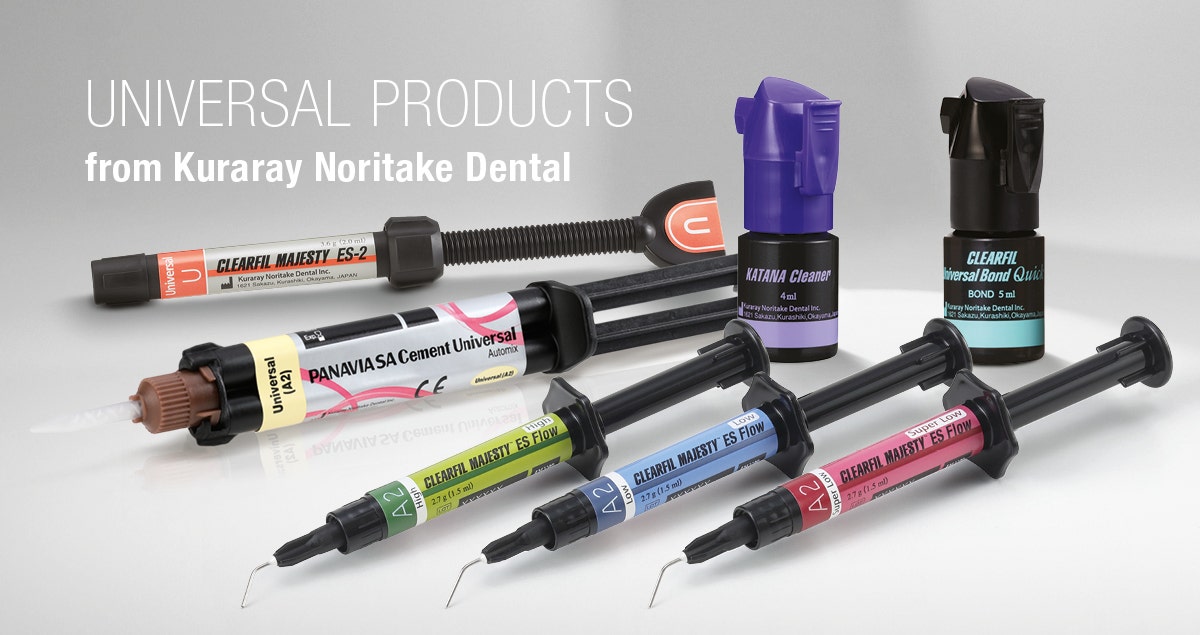
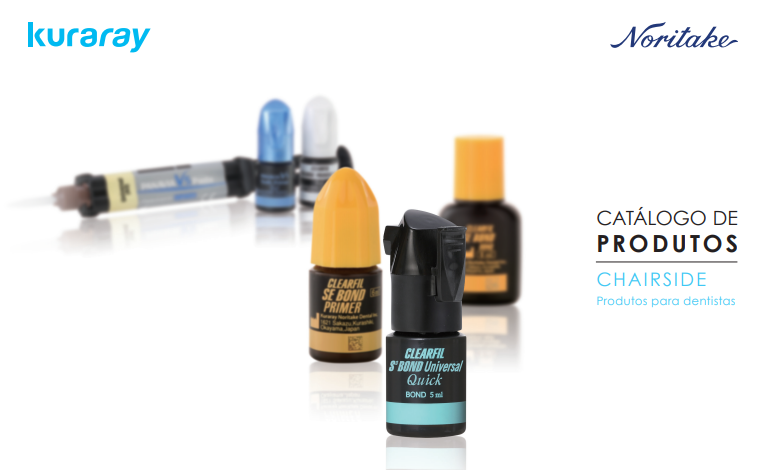
Under the umbrella name Universal Excellence, Kuraray Noritake Dental Inc's product range includes a well-balanced selection of universal bonding and cementing products, making it possible for dentists to perform a wide range of treatments with only a limited product range.
CLEARFIL™ Universal Bond Quick is the basis for adhesive treatments; a one-step universal bonding that can be used, at the dentist's discretion, as a self-etching or fully-etched bonding option or as a combination of selective enamel etching. Rapid Bond Technology is used for this bonding, which also contains fluoride. This technological development makes it possible to realise maximum penetration in tooth tissue, followed by hydrophobic sealing after light-curing. The original MDP monomer constitutes the backbone of CLEARFIL™ Universal Bond Quick, as it does in our other bonding systems.
The recently introduced CLEARFIL MAJESTY™ ES-2 Universal composite is truly a game changer. This material is universal both in terms of indication spectrum and colour adaptation. CLEARFIL MAJESTY™ ES-2 Universal may not be the only composite in this relatively new segment, but it is by far the most forgiving. This is due to the meticulously calculated amount of refractory fillers, or so-called light diffusion fillers, in a composite of optimum translucency. The composite blends effortlessly with the colour of the teeth without the need for additional opaque composites in small or large anterior or posterior restorations.
CLEARFIL MAJESTY™ ES Flow is a flowable composite available in three levels of flowability. This flowable integrates seamlessly with the Universal Excellence concept, thanks to its wide range of indications. The unparalleled Kuraray silane technology and the specific resin used provide that CLEARFIL MAJESTY™ ES Flow is not only flowable, but also strong; in fact, this flowable is actually stronger than most paste composites. It is also a genuine pleasure to work with. Unlike other flowables, CLEARFIL MAJESTY™ ES Flow can be applied and manipulated easily because it does not stick to the application needle or instrument.
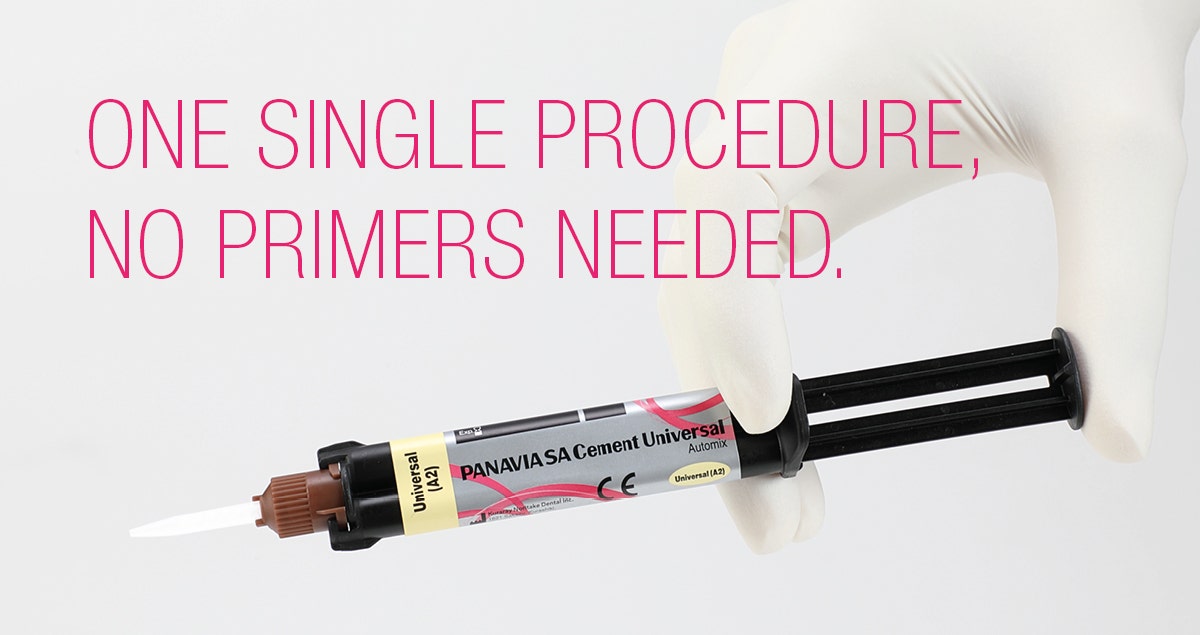
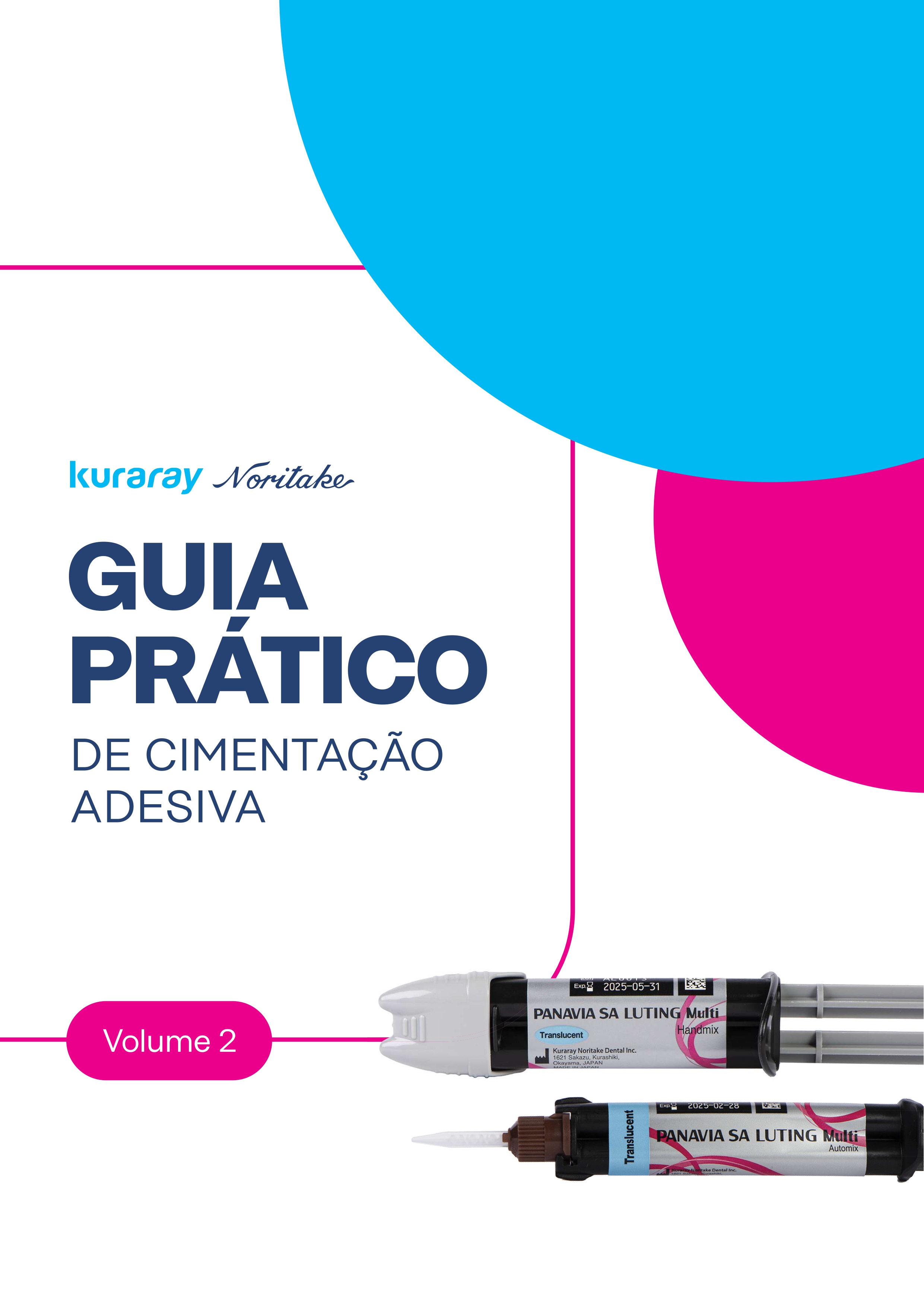
Wouldn’t it be good to have adhesive resin cements without the need for additional primers? This is now possible with PANAVIA™ SA Cement Universal. Only one product needed to bond to tooth tissue and to most prosthetic materials. It will even bond to glass-based ceramics such as lithium disilicate without the use of a separate silane primer. That is because – in addition to MDP – PANAVIA™ SA Cement Universal includes the unique, long carbon chain silane (LCSi) also used in CLEARFIL MAJESTY™ ES Flow. How universal can a product be?
Finally, we would like to highlight KATANA™ Cleaner, a universal cleaning agent for both intra-oral and extra-oral use. Clean, decontaminated surfaces are the most effective basis for adhesive procedures, and because KATANA™ Cleaner is based on MDP, it is also fully compatible with our bonding and adhesive/cementing products.
You can rely on Universal Excellence both in terms of providing the very best treatments in your practice, and to avoid the holding of unnecessary stock and the risk of being confronted with unused products that have exceeded their best-before date.
Interview with Peter Schouten, Technical Manager, Kuraray Europe Benelux
PRECISION - STRENGTH - POLISHABILITY
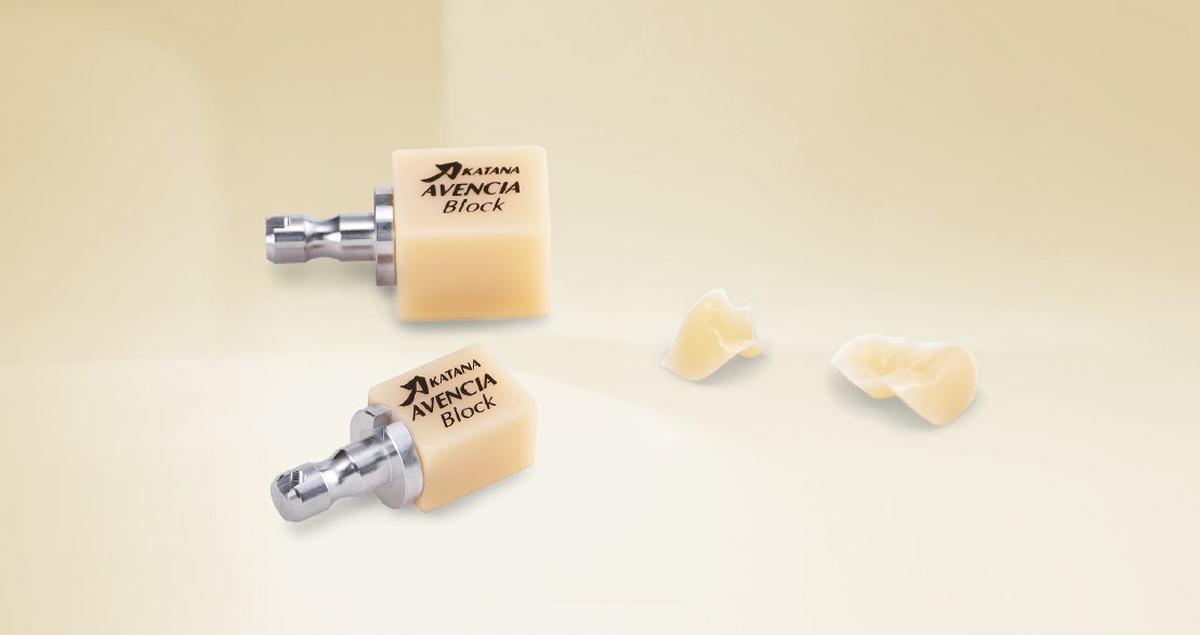
When creating KATANA™ AVENCIA™ Block for CAD/CAM, our goal was to develop a block that would be easy to grind while delivering a smooth surface. Of course, its mechanical properties had to be first-rate, and we aimed for excellent gloss retention. Finally, it goes without saying that KATANA™ AVENCIA™ Block restorations had to be durable as well as being suitable for adhesive cementing.
Existing hybrid ceramic blocks on the market (except for VITA™ Enamic) are produced in the same way as direct dental filling composites, namely, silanized filler mixed with synthetic resin. The composite is then formed into a block or a mold and polymerised. The disadvantages are a non-uniform distribution of the filler particles and an increased risk of trapped air which can result in voids. Instead, KATANA™ AVENCIA™ Block uses the unique Filler Press and Monomer Infiltration method, developed by Koichi Okada et al. The treatment of the filler is what makes this method so unique.
Nano-sized silica fillers pre-treated with silane combined with nano-sized alumina fillers are densely compressed into a block which is subsequently impregnated with resin. Finally, the blocks are polymerized by heat to achieve a maximized degree of polymerization. Blocks manufactured in this way have a dense, homogenous and virtually void-free structure.
SEM photos show the microstructure of KATANA™ AVENCIA™ Block, in a comparison with other materials. KATANA™ AVENCIA™ Block is filled densely and uniformly with only nano-sized filler.
Smooth
Owing to the high filler content with filler particles of up to a maximum of 40 μm, KATANA™ AVENCIA™ Block is not only strong but also extremely easy to grind. Thanks to smooth result the next step - polishing - is simplicity itself.
Strong
The KATANA™ AVENCIA™ Block is yet another example of how we have fully exploited our knowledge and expertise in the silanisation of fillers. The nano-sized, optimally silanised silica fillers establish tight connection between silica and resin-matrix. This is essential when aiming to achieve strong and stable prosthetics.
*Not a trademark of Kuraray Noritake Dental Inc. ** Test Condition: Toothbrush wear test using tooth paste. Load: 250 g. Source: Kuraray Noritake Dental Inc.
Polishability
The dense, homogenous, and void free structure of KATANA™ AVENCIA™ Block is the reason that the high gloss easily achieved with polishing only will be long-lasting. KATANA™ AVENCIA™ Block shows virtually no reduction of gloss after tens of thousands of brushing movements in the toothbrush test.
For optimum, long-lasting and durable results, it goes without saying that KATANA™ AVENCIA™ Block restorations should be affixed with one of the products from the PANAVIA™ family.
By Peter Schouten, Technical Manager, Kuraray Europe Benelux
The first flowable composites, or flowables, appeared on the dental market in the 1990s. The composition of these materials was entirely based on that of existing packable composites: They contained the same filler particles and resin matrix, but a reduced filler content. Hence, they had a lower viscosity, resulting in better flow characteristics for easy modelling and adaptability to the cavity, but weaker physical and mechanical properties than their packable counterparts. This made them not more than a useful addition to the existing portfolio of resin-based composites: They were widely used as, among others, filling material for Class V lesions and as a liner in large Class I and II cavities.
To broaden the initially limited range of indications, Kuraray Noritake Dental decided to focus on improving the mechanical and physical properties of flowables by developing an entirely new range of products: CLEARFIL MAJESTY™ ES Flow universal flowable composite. Although its predecessor; CLEARFIL MAJESTY™ Flow has higher filler loading and similar mechanical properties, the term universal indicates that the materials are universally applicable. Indeed, the potential indications are vast when compared with the range of indications of a flowable in the past. No matter whether the user wants to apply it as a liner or plans an extensive Class II restoration, CLEARFIL MAJESTY™ ES Flow is an ideal choice.
Three flowability options
As Kuraray Noritake Dental wanted to create a product that performs as desired in every indication, CLEARFIL MAJESTY™ ES Flow is available in three flowability variants. The high flowability material CLEARFIL MAJESTY™ ES Flow High (with green label) was designed for use as a liner, the filling of small imperfections and the restoration of small lesions allowing for micro-invasive preparations. The medium flowability variant CLEARFIL MAJESTY™ ES Flow Low (with blue label) is the most universal of the series and can be used for most indications. The lowest flowability option is CLEARFIL MAJESTY™ ES Flow Super Low (with red label). It may be used in the context of creating larger posterior restorations and for cementing of inlays or onlays.
Appreciated by practitioners
The fact that the product works well in the hands of the dental practitioner was confirmed in the independent publication Dental Advisor: In the issue January-February 2019 (Volume 36, Number 1), CLEARFIL MAJESTY™ ES Flow won Dental Advisor's Top Product Award for the fifth year in a row. In the report, it was described as “Universal Highly-Filled Flowable”, and this is exactly what it is!
CLEARFIL MAJESTY™ ES Flow won Dental Advisor’s Top Product Award for the fifth year in a row.
Unlike the early generation flowables, CLEARFIL MAJESTY™ ES Flow has a high filler content and a flexural strength that is higher than that of most frequently used more paste-like composites.
All three variants are high strength. Compare this with your existing composite.
Given that the universal flowable composite offers so many beneficial properties, dental practitioners might be tempted to replace the packable composite they have been using so far with CLEARFIL MAJESTY™ ES Flow. For the majority of indications, this is indeed possible. Those who do so, will also find that application and modelling directly from the syringe works very well, eliminating the need for a separate instrument.
Unique technologies
What makes the material so unique? It is probably the combination of existing and new technologies that is responsible for superior mechanical properties, a high aesthetic potential and great handling characteristics. Kuraray Noritake’s unique light diffusion technology utilized in the aesthetic composite range CLEARFIL MAJESTY™ ES-2 is also used in CLEARFIL MAJESTY™ ES Flow. Combined with proprietary filler technology, this innovative ingredient is responsible for the fact that restorations made of CLEARFIL MAJESTY™ ES Flow are assimilated within the surrounding tooth structure almost automatically.
The third decisive component is silane technology. The long-chain silane used in CLEARFIL MAJESTY™ ES Flow provides for an optimum wetting capacity of the filler particles. This is a key reason why it is possible to increase the filler percentage to such a high level. After polymerization, the strong bond between the filler and the synthetic resin, brought about by the silane, creates a long-lasting bond. The water absorption is therefore also extremely low, a property any user of composites from Kuraray Noritake may be familiar with.
The unique composition of CLEARFIL MAJESTY™ ES Flow is also responsible for a great polishability and polish retention. Polishing is effortless. Even wiping with alcohol will give a quite nice gloss.
With all these benefits combined in one product, CLEARFIL MAJESTY™ ES Flow offers unparalleled convenience when it comes to creating composite restorations. Kuraray Noritake Dental is proud to have driven technological innovation and applied new developments them in the right way to give the user endless options with a universal flowable composite.
By Peter Schouten, Technical Manager Kuraray Europe Benelux
Kuraray Noritake’s self-adhesive cement series, PANAVIA™ SA Cement Universal, has evolved through several stages of development since it was first introduced as “CLEARFIL™ SA Cement”. Over time, various improvements have been implemented, bringing us to our latest product: PANAVIA™ SA Cement Universal. Improvements include: strengthening of the bonding power to dental tissue, increasing the storage temperature to room temperature and extending the shelf life to three years. What remained the same - the easy removal of any excess cement, the moisture tolerance and the integration of the original MDP monomer.
The original MDP enables PANAVIA™ SA Cement Universal to be bonded to dental tissue as well as to metals and zirconia ceramics. Until recently, the chemical bonding of glass-based materials such as porcelain, glass ceramics, including lithium disilicate, and composite, was only possible with an additional silane-based primer.
With the introduction of PANAVIA™ SA Cement Universal the silanisation step has become redundant. Instead, the silane has been incorporated into the PANAVIA™ SA Cement Universal paste. As a result, there is only one single universal procedure, without the need for separate primers.
LCSi
Adding silane to the paste sounds easy. However, there are some limiting factors. For example, keeping silane in the form of γ-MPS (γ-methacryloxypropyltrimethoxysilane) active for a long time is a challenge. This is partly due to γ-MPS’ hydrophilic nature. Contact with water under acidic condition results in hydrolysis of alkoxy groups of silane. Therefore, it is best to use a more hydrophobic and thus stable silane and to avoid bringing it into contact with water and acid prematurely.
We have been using a long-chain silane (LCSi) for some time in a number of our superior composites, such as CLEARFIL™ MAJESTY™ Posterior and CLEARFIL™ MAJESTY™ ES Flow. However it’s the first time we have used it in a cement.
This unique silane has long hydrocarbon spacer (the hydrocarbon chain between the silanol group and the methacrylate group) which makes it more hydrophobic and stable than the small γ-MPS molecule. The reaction with the silica particles in the glass-based materials is expected to be also more orderly and faster. The result is a more optimally bonded surface with a greater resistance to hydrolysis.
A great deal of thought has gone into combatting the degradation of silanes in PANAVIA™ SA Cement Universal. It was decided to separate the more hydrophilic components from the hydrophobic ones so they only come together when the paste is mixed. This is why we are able to achieve a three-year shelf life, even when stored at room temperature.
Research
It’s not only in-house data that show comparable or even better bonding of PANAVIA™ SA Cement Universal to glass-based materials, than with its previous version, PANAVIA™ SA Cement Plus, in combination with CLEARFIL™ CERAMIC PRIMER PLUS. The first results from independent research are also strongly supporting this.
With PANAVIA™ SA Cement Universal, there is now a self-adhesive resin cement on the market that allows virtually all indirect materials to be bonded directly without the intervention of primers or bonding.
By Peter Schouten, Technical Manager Kuraray Europe Benelux
CLEARFIL MAJESTY™ ES-2 is the composite that allows intuitive creation of natural-looking restorations. The combination of its self-adaptive capacity, thanks to the use of light diffusion technology, its natural fluorescence, high filler content, fine workability and exceptional polishability provide outstanding aesthetic results.
CLEARFIL MAJESTY™ ES-2 is a forgiving composite. It blends seamlessly with the adjacent tooth structure. This is because CLEARFIL MAJESTY™ ES-2 incorporates light diffusing technology. This makes it possible to cover the entire VITA range using only VITA A shades.
In our endeavors to reproduce nature, we need to step away from the notion that artificial materials do all the work for us. Especially enamel is a difficult kind of tissue to replace with artificial materials like composite. When you replace natural enamel with translucent composite you almost never reach the desired goal! Why is this? The most determinant factor is the difference in value. Natural enamel increases in value in proportion to its thickness, while for (translucent) composite the value decreases.
In certain situations, for instance for the reproduction of the incisal edge of a central incisor, where a translucent zone is naturally present, the use of a more or less translucent composite is needed. However, it is often the opacity of a composite that we wish to harness in order to cover up underlying (irregular) discoloration. To do this, the use of a translucent composite is clearly not desirable. In this situation, the most opaque variant is your first choice of composite.
You've probably been there: applying anatomical layering techniques with a composite system, only to arrive at a somewhat disappointing result that looks too gray. This can be explained by the fact that, as a manufacturer - and we're certainly not alone here - we have created some confusion by giving composites names such as Dentin and, worse still, Enamel. These names suggest that these materials can be used as a replacement for natural dental tissue. Due to the totally different optical properties of each dental tissue and composite, this can only be achieved within a frequently too narrow spectrum. Therefore, when it comes to the use of the more translucent composite variants, I recommend a cautious approach. Only use such variants where transparency is required.
...it is often the opacity of a composite that we wish to harness in order to cover up underlying (irregular) discoloration. To do this, the use of a translucent composite is clearly not desirable. In this situation, the most opaque variant is your first choice of composite.
Kuraray Noritake Dental offers three basic opacities within the CLEARFIL MAJESTY™ family. These three variants enable you to create transparency where necessary, or indeed to avoid it in zones where greater coverage is required. The most opaque variant within the CLEARFIL MAJESTY™ ES-2 family is Premium Dentin. The semi-opaque variant Classic and the semi-translucent variant Premium Enamel.
The challenging class IV restoration as an example. The tendency exists to use dentin composite up to the dentin-enamel junction. Don't do this, but instead apply it right up to the outermost edge of the restoration. This means also covering the beveled enamel. Depending on the desired end result, you should only use the more translucent variants, Classic or Premium Enamel, in the incisal third.
Working with different variants of CLEARFIL MAJESTY™ ES-2 in one restoration where more than one variant end at the surface the transition from one type to the other is totally seamless. Since all three variants have virtually the same high filler percentages and filler type. During finishing you won't even notice the transition between the different variants. The polishability of all the variants is also identical.
All these qualities make CLEARFIL MAJESTY™ ES-2 your aesthetic composite for the effortless creation of natural-looking restorations. Both anterior and posterior.
Zirconia ceramics are increasingly being used for dental prostheses. In the past, they were used as a substructure that was baked with porcelain; nowadays, monolithic zirconia prostheses have been made possible by the introduction of aesthetic zirconia ceramics varieties. They are used more and more, even as RBFDPs (Resin Bonded Fixed Dental Prosthesis).
There is currently quite a lot of discussion about zirconia. So much the better, because it keeps the dynamics of the subject alive. Is it possible to adhesively cement zirconia? Is it permissible to sandblast zirconia? Is it feasible to polish zirconia? Is wear of the antagonist an issue? And so on and so forth.
New dental technologies and materials have been developed in recent years to meet the demand for aesthetic, biocompatible and metal-free prostheses. Although porcelain has been used as an aesthetic dental material for more than hundred years, its restrictions are now well-known. It is the fragility of porcelain (low flexural strength and fracture toughness) in particular which restricts its application in areas where the exertion of massive force on the material is a factor. Zirconia has a high flexural strength and is therefore suitable for multiple dental applications.
Development
The first generation of zirconias used in dentistry belonged to the Partially Stabilised Zirconia (PSZ) class. This type of zirconia, stabilised with yttrium oxide, was composed of a mix of monoclinic, tetragonal and cubic crystals but is no longer used nowadays. The so-called Y-TZP variant was then used for many years, and still is. Its main characteristics are high flexural strength (> 1.000 MPa) and an opaque white appearance. For the most part, this variant is composed of tetragonal crystals of a few hundred nanometers. To keep the material stable at room temperature, approximately 3 mol% of yttrium oxide is added to the composition, which is why it is sometimes referred to as 3Y zirconia.
In order to improve its aesthetic properties, a start was made on the development of a new variety, so-called cubic zirconia. Cubic zirconia is characterised by a high translucence, meaning that a lower flexural strength must be accepted. Admittedly, the flexural strength of this variant is lower than that of the tetragonal variety, but still much higher than the flexural strength of lithium disilicate. It also contains more yttrium oxide; approximately 5 mol%.
Crystal phases
We currently know zirconia crystals in three varieties: monoclinic, tetragonal and cubic. In general, zirconia only exists in the monoclinic phase at room temperature. Monoclinic zirconia has low strength as well as low translucence. Tetragonal zirconia crystals are metastable and can only exist at room temperature after having been stabilised with yttrium oxide, among other metal oxides. The characteristics of tetragonal zirconia are that it is strong, but at the same time devoid of aesthetic properties. Cubic crystals are stable and ensure improved translucence. Although prostheses made from cubic zirconia are not as strong as the tetragonal variety, they are highly aesthetic, and are even suitable for monolithic restorations in the aesthetic zones.
Multilayer
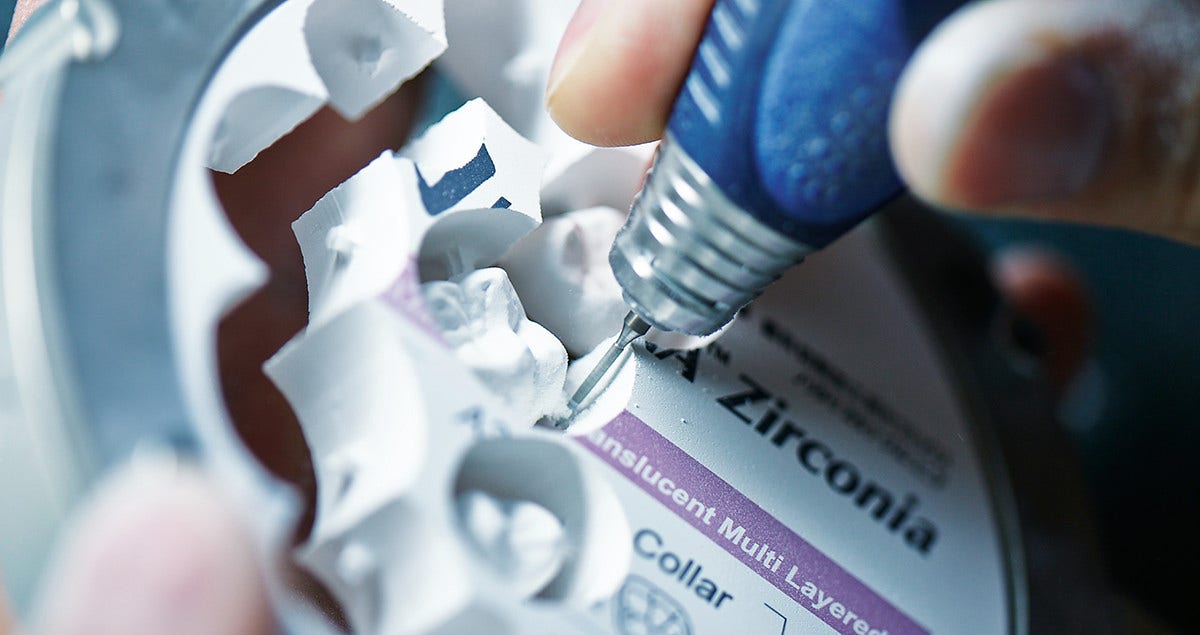
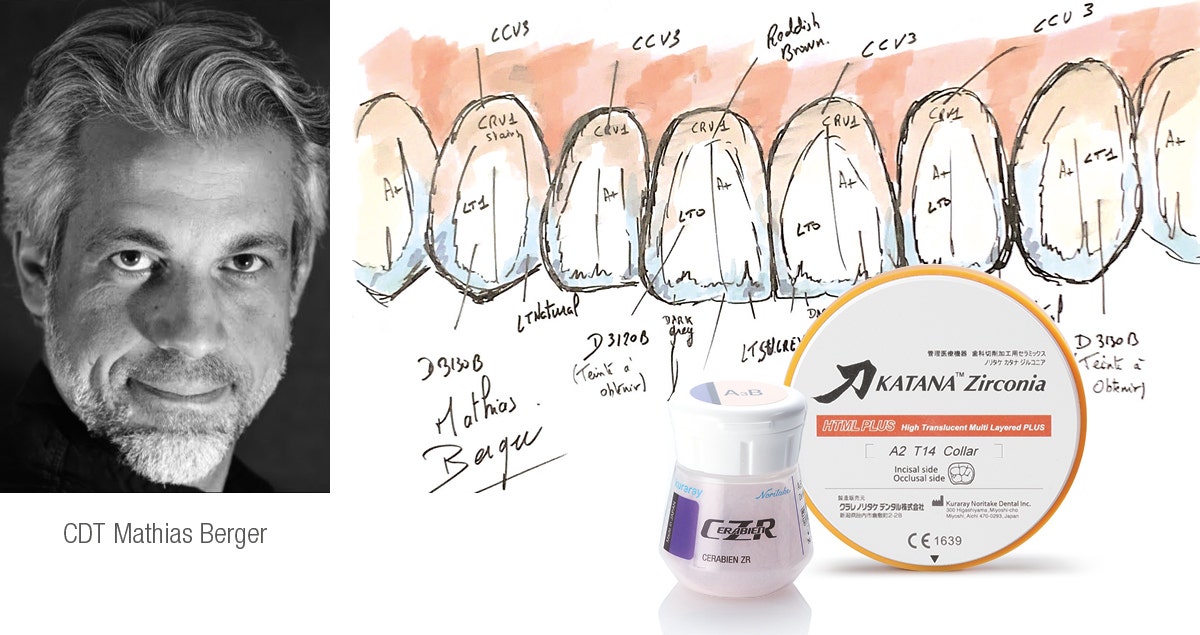
KATANA™ Zirconia ML, STML and UTML, as well as the latest KATANA™ Zirconia Block, are so-called multilayer zirconias. These products are built up of four layers with an ascending degree of translucency, ranging from the more opaque and coloured body layer (cervical), through two transitional layers, to the translucent incisal edge (occlusal/incisal). The invisible transition from one layer to another is achieved using a unique process. The secret is in the specific distribution of particles during the pre-sintered stage (continuous gap grading). In combination with the cold isostatic pressing method, this ensures material of an outstandingly high quality.
KATANA™ Zirconia Block
The use of KATANA™ Zirconia Block makes it possible to produce a complete monolithic zirconia prosthesis in a short time. This block was developed to be used within the CEREC workflow. After scanning, the prosthesis is ground for approximately 15 minutes and can then be sintered in the SpeedFire oven in just half an hour1). KATANA™ Zirconia Block shares the properties of KATANA™ STML and can be used for the production of single-unit prostheses such as full crowns for both anterior and posterior applications.
Wear of the antagonist
The question of whether zirconia prostheses are harmful to the antagonist would seem to be justified; after all, this is a very hard material. Hardness, however, does not relate directly to the abrasive properties of a material. Smoothly polished zirconia is minimally abrasive, something which has been corroborated by multiple studies2). Glaze, porcelain, lithium disilicate and even enamel are all more abrasive for the antagonist.
CAD/CAM
Thanks to emerging digital solutions (CAD/CAM) combined with the possibility of executing fixed partial dentures (FPDs) in monolithic zirconia, a fully digital workflow - from scan to prosthesis - is now feasible.
Sandblasting
Sandblasting using alumina is the standard method for the roughening of zirconia. In order to reduce the decline from the tetragonal crystal stage to the monoclinic stage, it is recommended that sandblasting be carried out at a maximum pressure of 2.5 bar using 50 micron aluminium oxide particles as a maximum3). In practice, zirconia is also frequently sandblasted tribochemically, for example, by means of CoJet (3M). The results achieved with this method are variable. In the case of limited pressure (2.5 bar as a maximum) there is a risk that the energy will be insufficient to achieve an effective and complete fusion between the silica and the zirconia surface. It is therefore recommended that CLEARFIL™ Ceramic Primer Plus be used for adhesive connection with the sandblasted surface. The silane in this ceramic primer bonds chemically with the silica, while the MDP bonds with the areas of zirconia not covered by silica. The use of silane alone does not provide an adequate basis for a reliable result4). Sandblasting with alumina, however, followed by priming with CLEARFIL™ Ceramic Primer Plus, is a well-proven and reliable method to ensure effective bonding to zirconia5).
Not etchable, but certainly bondable
Zirconia is not – or is barely – etchable with the etching technology available (HF). In addition, it cannot be recommended that zirconia be treated with phosphoric acid, because of the bonding of phosphates to the surface of the zirconia, which will inhibit a chemical activation of the surface for some adhesive cementation systems. The question of whether an etching product should be used is a valid one; after all, chemical etching is not necessary to achieve surface roughness. Achieving surface roughness is, however, a logical option, and roughening by means of sandblasting would seem to be the most appropriate method for zirconia. Thereafter, chemical bonding is ensured using a phosphoric functional monomer, preferably MDP.
Adhesion principles
Three basic factors are required to achieve the effective bonding of different materials. In keeping with the principles of adhesion, these are: surface enlargement (micromechanical retention), chemical activity (adsorption and electrostatic bonding) and a high-energetic surface to guarantee proper adaptation.
Adhesive bonding
The best method of adhesive bonding for zirconia is the use of a composite cement containing MDP. Professor Mathias Kern published an article about bonding to zirconia using MDP as early as 1998. This study showed that sustainable resin bonding to zirconia can only be achieved using a composite cement with a special adhesive monomer. The monomer used was in fact MDP. In the meantime, many studies have been published about bonding to zirconia.
On the one hand, these studies concern bonding with phosphate monomers (MDP); on the other hand, attention has been paid to the modification of the zirconia surface to render it etchable. The simplest and most reliable method is to sandblast the surface at a low pressure using aluminium oxide, followed by priming with an MDP-containing primer6).
PETER SCHOUTEN, Technical Manager Kuraray Europe Benelux
1) Depending on the method of grinding/milling. 2) Mörmann W.H. et al. Wear characteristics of current aesthetic dental restorative CAD/CAM materials: Two body wear, gloss retention, roughness and Martens hardness. Journal of the mech. Behavior of Biomedical Materials 20 (2013) 113-125, Janyavula S. et al. The wear of polished and glazed zirconia against enamel. J Prosthet Dent 2013; 109;22-29 Stawarczyk B. et al. Comparison of four monolithic zirconia materials with conventional ones: Contrast ratio, grain size, four-point flexural strength and two-body wear. Journal of the mech. Behavior of Biomedical Materials 59 (2016) 128-138 D’Arcangelo C. et al. Wear Evaluation of Prosthetic Materials Opposing Themselves. Oper Dent 2017 antagonistic surface roughness on the wear of human enamel and nanofilled composite resin artificial teeth. J Prosthet dent 2009; 101: 342-349. 3) Attia A. / Kern M. Effect of cleaning methods after reduced-pressure Air Abrasion on Bonding to Zirconia Ceramic J Adhes Dent 2011; 13: 561-567. 4) Pilo R. Effect of tribochemical treatments and silane reactivity on resin bonding to zirconia. Dent Mater (2017). 5) Kern M. Bonding to oxide ceramics - Laboratory testing versus clinical outcomes. Dent Mater (2014). 6) M. Kern et al., Bonding to zirconia ceramic: adhesion methods and their durability. Dent Mater 14: 64-71, Jan.1998.
Peter Schouten, Technical Manager at Kuraray Europe Benelux
Before universal adhesives were available, two major techniques were used: total-etching adhesives, which basically work with phosphoric acid etching on enamel and dentine; and self-etching adhesives, which can be used with or without the option of etching enamel selectively. Prior to the introduction of self-etching adhesives in the late 1990s, dentists used mostly total-etching techniques. While this procedure achieves strong enamel bonding, it can also be very technique-sensitive and involves several steps. As a consequence, dentists welcomed the development of simplified adhesives. In 2011, the new generation of universal adhesives was introduced, with the aim of replacing all previous generations.
The development of universal adhesives was firstly due to the success of self-etching adhesives, but total etching was still advocated. The result, a universal adhesive, must be considered a self-etching adhesive with a phosphoric acid conditioning option on enamel and/or dentine. Maximum flexibility resulting from the freedom of choice in etching technique and the preference of the practitioner was thus obtained.
CLEARFIL Universal Bond Quick, manufactured by Kuraray Noritake Dental, is a single-component light-curing bonding agent indicated for all direct and indirect restorations in combination with all etching techniques (total-etching, self-etching or selective-etching). The adhesive is also indicated for the surface treatment of zirconia- and silica-based ceramics. When compared with other one-bottle universal adhesives, CLEARFIL Universal Bond Quick exhibits RAPID BOND TECHNOLOGY. We asked Peter Schouten, Technical Manager at Kuraray Europe Benelux and a chemist with decades of experience in the dental industry, about his views on universal adhesives and CLEARFIL Universal Bond Quick.
Dental Tribune: Since the introduction of the first universal adhesive, a new generation of adhesives has been created that has enjoyed increasing popularity since then. What is your opinion about the system?
Peter Schouten: For me, the term “universal” remains debatable. There is no clear definition of a universal bonding system yet. When we look at what different manufacturers are saying about universal bonding systems, the term to me applies primarily to the etching technologies and the ability to adhere to all substrates currently used in dentistry, such as silica- or metal-based materials. In this case, we can really speak of “universal”.
What are the advantages and disadvantages of self-etching and total-etching technologies? How are universal adhesives positioned in relation to them?
In my home country of the Netherlands, there is a large group of self-etching users. In many other countries, most dentists still use the total-etching approach. And, of course, there are reliable three-step total-etching systems on the market. However, etching of dentine removes hydroxyapatite and creates a layer of collagen. Afterwards, the dentist tries his or her best to penetrate this layer again with a bonding system. Why not preserve the hydroxyapatite and create a reliable bonding to the hydroxyapatite itself? This is the basis of the gold standard two-step self-etching bonding, our CLEARFIL SE BOND. Now universal adhesives—at least CLEARFIL Universal Bond Quick—provide the advantage that dentists can use any etching technique without worrying about results that are less than optimal. It really is an open system.
How do universal adhesives perform on wet and dry dentine, as well as enamel, in combination with all etching technologies?
I am a strong believer in the self-etching technique as we have proven already. The wetness and dryness of dentine is always an issue in total-etching techniques. With CLEARFIL Universal Bond Quick, the instruction is to rinse and dry. Our universal adhesive has the capability of penetrating the dentine surface quickly and completely.
Kuraray is a pioneer in adhesive systems: the company introduced total-etching bonding in the 1970s and innovative self-etching technology in the 1990s. The secret to success of all universal adhesives seems to be the incorporation of the adhesive molecule MDP (10-methacryloyloxydecyl dihydrogen phosphate) developed in 1981 by Kuraray. What is the function of MDP?
Kuraray has over 40 years of experience in the development of phosphate monomers. In 1976, we had already developed Phenyl-P. By far the most important ingredient in our current bonding systems is the original MDP. We never would have reached the level at which we are today without this phosphate monomer. MDP is capable of creating a long-lasting bond to calcium in hydroxyapatite and to other metals. As MDP can chemically bond to Ca2+ ions, it forms stable, insoluble MDP–Ca salts present as nano-layers at the adhesive interface.
Kuraray Noritake Dental introduced CLEARFIL Universal Bond Quick at this year’s International Dental Show. According to the company, CLEARFIL Universal Bond is the best one-step adhesive ever developed. Briefly, what do you find noteworthy about the bonding agent?
The most remarkable thing is RAPID BOND TECHNOLOGY, enabling us to introduce the benefit of no waiting. This technology works in three steps: first, rapid penetration; second, fast polymerisation; and third, quick formation of a hydrophobic, hydrolytically stable bonding layer. It took our research and development lead Dr Yamato Nojiri many years to develop a cocktail of amide monomers that is superhydrophilic and turns after curing into a stable hydrophobic polymer. The addition of this amide monomer makes it possible to skip the waiting step. Fast polymerisation is achieved by a modified photoinitiator, releasing twice as many radicals in comparison with other initiators. The quickly formed stable bond derives from the combined action of MDP and the amide monomer. MDP bonds to calcium and amide monomer turns into a highly cross-linked hydrophobic polymer network.
The motto of CLEARFIL Universal Bond Quick is “Universal. Easy. Reliable.” Could you please explain that further?
I think that clinicians will be very satisfied with the bonding agent’s performance and wide indication range. It definitely will be used mainly for direct restorations with light-curing composite resins, but also for core build-ups, cavity sealing, treatment of exposed root surfaces and hypersensitive teeth. The pretreatment of the tooth can be done with any of the three etching procedures before applying this adhesive. For selective enamel etching and total-etching, phosphoric acid needs to be applied. I recommend K-ETCHANT Syringe etching gel. It is left in place for 10 seconds, followed by rinsing and drying. The product is very easy to use and not technique-sensitive. The result is a reliable bond because of the use of our proven MDP technology combined with the cross-linked hydrophobic polymer network.
Does CLEARFIL Universal Bond Quick adhere to any dental substrate (lithium disilicate, zirconia and metals)?
Yes, it does. CLEARFIL Universal Bond Quick is the ideal bonding agent in most situations. Bonding to tooth structure and to most direct and indirect filling materials can be performed with CLEARFIL Universal Bond Quick. For the pretreatment of silica-based ceramics (glass-ceramics); however, we advise the use of CLEARFIL CERAMIC PRIMER PLUS for the most optimal results.
What is known regarding combining universal adhesives with light-curing, dual-curing and self-curing composites without the use of primers? Can the dentist really combine them without any problems?
It can be used with all light-curing composites and compomers, with the exception of silorane-based composites. For use with self- and dual-cure composites, CLEARFIL DC Activator is needed. This catalyst activates the dual-curing mechanism of this adhesive. However, the addition of CLEARFIL DC Activator to the adhesive is not required when using it with CLEARFIL DC CORE PLUS or PANAVIA SA Cement Plus.
What do you see for the future of universal adhesives?
As long as we still need adhesives to bond our composites to tooth structure, I'm almost certain that single-bottle universal adhesives will become the most used systems. In vitro tests have shown good results. A universal, easy-to-use adhesive with few treatment steps and a short working time reduces the risks of errors. Of course, relevant long-term clinical research results are needed to prove the quality. Kuraray Noritake Dental, with its leading adhesive technology, will surely remain the leader in this field.
We use cookies to improve your experience on our website If you click on "Accept", you consent to the storage of cookies on your device in order to improve website navigation, analyze website use and support our marketing efforts. Read more in our cookie declaration and privacy policy
Definições de biscoitos
Functional cookies are cookies that ensure the proper functioning of the Website (e.g. cookies for login or registration, language preferences) and their installation does not require your permission.
In our privacy policy you will learn in more detail how we make use of these cookies.
Leia mais
Statistic cookies are implemented so we can measure the use of the website.
To determine which parts of the website are most interesting to our visitors, we continuously try to measure how many visitors come to our website and which parts of the website are viewed the most by using the software of Google Analytics, Matomo and Hotjar.
We do this to keep track of web statistics. Statistics are made of the information we collect in this way. These statistics give us insight into how often our web pages are visited, where visitors spend the most time, and so on. This enables us to make the structure, navigation and content of the website as user-friendly as possible.
We cannot trace the statistics and other reports back to people. For this reason, analytical cookies do not require consent and cannot be turned off.
In our privacy policy you will learn in more detail how we make use of these cookies.
Leia mais
After your permission, tracking cookies are placed on your equipment. We use these cookies to keep track of which pages you visit in order to understand your online behavior better.
We combine data to build personal profiles of you, so that we can approach you more specifically with content, newsletters, offers or promotions. This allows us to show more personalized offers and information within our websites and newsletters.
In our privacy policy you will learn in more detail how we make use of these cookies.
Leia mais